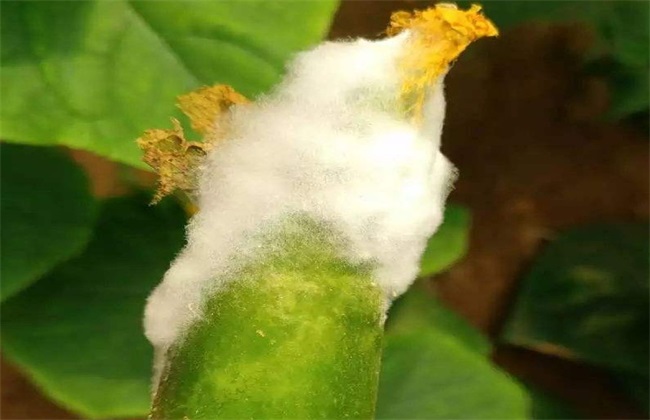
What causes white fuzz to grow on cucumbers?
After cucumbers are planted and begin to set fruit, various diseases often occur. This is why growers in the field keep finding cucumbers with white fuzz. What is the cause? Is it an infection from some disease, or a physiological disorder? Let us find out the cause together, along with the correct and effective control methods.
1. Causes
White fuzz on cucumbers is actually caused by cucumber sclerotinia rot (Sclerotinia sclerotiorum). It can develop from the seedling stage through the entire growing period, with the base being the most severely affected. This is a disease caused by fungi, mainly a soil-borne disease; the sclerotia overwinter and oversummer in the soil. Seeds can carry the pathogen and spread it, and sometimes ascospores are produced that spread with airflow. When flowers are infected, they can also transmit the disease when they drop and touch the stems and leaves. Cruciferous and solanaceous vegetables are heavily affected crops.
2. Symptoms
When the fruit is affected, water-soaked lesions appear at the blossom end, with soft rot, and cottony mycelium grows on the lesions. When the stem is affected, water-soaked lesions also appear, spread, turn light brown in color, begin to rot, and grow white cottony mycelium. Inside the stem there are sclerotia, and eventually the plant wilts and dies. When seedlings are infected, water-soaked lesions encircle the base, causing damping-off; in warm, humid conditions, white sclerotia form on the diseased part, later turning black.
3. Prevention
Use paddy-upland crop rotation. During the idle period, or in summer, soak the paddy field; after harvest, plow deeply, or you can also soak with water. To prevent seed-borne pathogens, use a 10% salt solution to rinse the seeds several times to disinfect them, or sun-dry the seeds, or spray with a 400-fold solution of 50% carbendazim. Alternatively, soak seeds in hot water. For soil disinfection, use a 500-fold solution of 50% procymidone, or a chlorothalonil solution.
4. Control
For chemical control once the disease occurs, the common options are a 500-fold solution of 50% Kaisai water-dispersible granules and a 500-fold solution of 40% Shijiale. Then you can add a 2000-fold solution of organosilicon, and afterward spray and smear it on the diseased parts, applying about once a week or a bit more than a week, for three consecutive applications, which gives a relatively good effect. But you can adjust according to the situation; if the effect is good, you can reduce the number of applications.
White fuzz on cucumbers is generally caused by sclerotinia rot, which is quite contagious and prone to re-infection. With timely control, it can be avoided. It is a disease that occurs frequently.