How to manage Chinese cabbage seedlings in autumn? These key points you need to master
Chinese cabbage is the most common vegetable, and many families grow some. Autumn is a good season for planting Chinese cabbage, especially in Northeast China, where many people are now busy planting Chinese cabbage. To achieve high yield and high quality in Chinese cabbage cultivation, seedling-stage management is extremely important. Below, let's take a look at the key points for managing Chinese cabbage seedlings.
1. Thinning
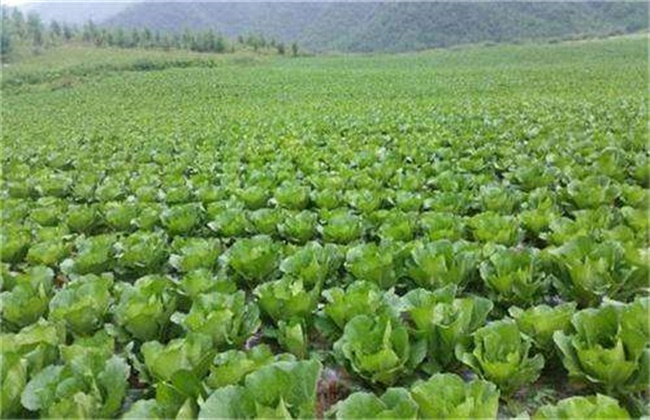
Autumn Chinese cabbage is generally sown directly, so after sowing and emergence, the Chinese cabbage needs to be thinned. Chinese cabbage thinning can be done in two rounds. The first thinning is carried out after the Chinese cabbage grows two true leaves, removing seedlings that are too densely growing and weaker in growth. The second thinning is carried out when the Chinese cabbage grows 3-4 true leaves. In this thinning, the spacing between plants and rows should be planned well, generally keeping a spacing of about 25-30 cm, and only retaining seedlings that are robust and free of pests and diseases.
2. Fertilizer and water management
Although Chinese cabbage is a water-loving crop, it is not tolerant of waterlogging. To prevent Chinese cabbage from encountering long periods of rainy weather during the growing season, it is best to choose ridge planting, which not only helps field ventilation but also helps promptly drain accumulated water from the field after rain, avoiding root rot and death. After planting, the water needed for Chinese cabbage growth should be replenished in time. Chinese cabbage has poor heat tolerance, and the temperature at noon in autumn is still very high, so watering should be done reasonably to lower the soil temperature and also keep the soil moist. In addition to reasonable irrigation, timely topdressing is also needed. Before planting, sufficient base fertilizer should be applied, and timely topdressing should be done at the seedling stage, rosette stage, and head-forming stage, which can effectively increase the yield of Chinese cabbage.
3. Binding management
When growing Chinese cabbage, many people find binding Chinese cabbage troublesome, but older people believe that binding Chinese cabbage is an indispensable process. In fact, if you want high yield from Chinese cabbage, the binding process is very important. Binding is generally carried out half a month before harvest. Sweet potato vines or rice straw can be used. First, gently lift the outer leaves of the Chinese cabbage, then tie them with rice straw or sweet potato vines at about two-thirds of the height of the Chinese cabbage. Do not tie too tightly, as this can easily affect the Chinese cabbage forming a heart. It should be noted that watering should not be done within 3-4 days before binding, and after binding, a small amount of water can be given to promote the growth of Chinese cabbage.
4. Pest and disease control
The pests and diseases that affect Chinese cabbage include aphids, damping-off, seedling blight, downy mildew, and others. Their occurrence seriously affects the growth of Chinese cabbage and also reduces its yield and quality. Therefore, timely control is needed, mainly focusing on prevention and combining prevention with control. During the peak period of pest and disease occurrence, pesticides should be sprayed promptly to prevent the spread of pathogens and pests.
The above is an introduction to the key points for managing Chinese cabbage seedlings in autumn. We hope it can help you. If you want to learn more related knowledge, please follow us.