Detailed Explanation of Key Points for Overwintering Eggplant Seedling Cultivation
In the past, when science and technology were not so advanced, we could only eat whatever vegetables were in season. With the development of agricultural technology, we can now use off-season cultivation techniques, bringing people considerable convenience. Today, let's talk about the overwintering seedling cultivation techniques for greenhouse eggplant and learn about them together.
1. Variety Selection
For overwintering eggplant, choose varieties that are tolerant to low temperatures and weak light, have good quality, and color well, suitable for cultivation under polyvinyl chloride greenhouse film, such as Meiyin Qieguan. This variety has bright coloring, long purple fruits, and green stems. It can grow normally under low temperature and weak light, and also has high yield and good coloring, making it very suitable for planting as overwintering eggplant.
2. Seed Treatment
After selecting the variety, first sun-dry the seeds. Sun-drying should be done on soil, never on concrete or anywhere else, as this may reduce seed vigor and be detrimental to germination. The purpose of sun-drying is to promote seed after-ripening, improve the germination rate and germination vigor, and at the same time kill surface pathogens. Sun-drying generally takes 1-2 days. After sun-drying, put the seeds into three times their volume of warm water, stir for 15 minutes after putting them in, wait until the water temperature drops to room temperature, soak for 8-9 hours, then remove and air-dry, ready for sowing.
3. Sowing
For the seedbed soil for sowing, choose field soil that has not been used to grow solanaceous fruit crops. Prepare it into a seedbed 1.2 m wide, 5—6 m long, and 10 cm thick. Apply 1 kg of potassium dihydrogen phosphate to each seedbed, then water heavily once to lower the ground temperature and facilitate germination. If conditions permit, chemical disinfection treatment can also be carried out. Then evenly scatter the germinated seeds on the seedbed, cover with a 2-3 cm layer of sieved fine soil, and then cover with plastic film. After sowing, maintain around 25-30 degrees during the day and around 16-20 degrees at night. When the temperature is too high, shade timely, and also ensure ventilation and light transmission. It is best to use a shade net, which both shades and prevents insects, with good results.
4. Seedling Stage Management
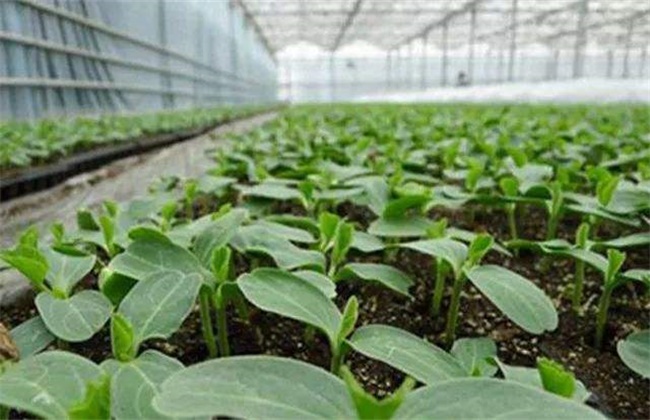
When most of the seeds have emerged, remove the plastic film in time. At the two-true-leaf stage, pay attention to preventing crickets from biting the seedlings. You can mix phoxim with wheat bran into poison bait and place it in small piles on the seedbed to trap and kill adult insects. After 40 days from sowing, when the eggplant seedlings have grown to 2-3 true leaves, space the seedlings at 10×10 cm. After seedling separation, maintain the temperature between 28-30 degrees, and at night between 18-20 degrees, to promote seedling recovery and growth. Before transplanting, spray water and pesticide to prevent the seedlings from carrying diseases. The standards for strong seedlings are a seedling height of 15-18 cm, 6-9 true leaves, a seedling age of 80-90 days, a well-developed root system that is milky white, and large buds showing on the upper part.
The above is an introduction to the seedling cultivation techniques for overwintering eggplant. We hope it can help you. To learn more related knowledge, please stay tuned to us.