What are the greenhouse cultivation and management techniques for baby napa cabbage?
Baby napa cabbage is called bok choy in many places and is extremely popular. It is crisp and sweet, and deeply loved by many people. As its market demand grows, many people have also started growing baby napa cabbage in greenhouses. Below, the editor brings you greenhouse cultivation and management techniques for baby napa cabbage. Let's take a look.
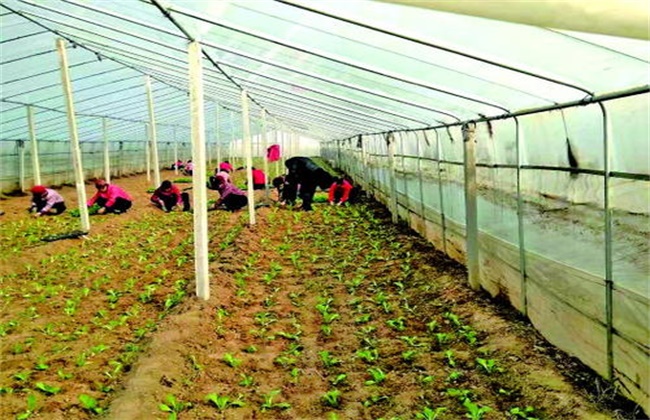
1. Variety selection
Baby napa cabbage varieties should be selected according to seasonal changes. For spring sowing, choose varieties with good cold tolerance and resistance to bolting, such as Gaoli Yu Wawa and Mini Star, because spring temperatures are relatively low. For summer, when temperatures are higher, choose disease-resistant varieties with good heat tolerance and early head formation, such as Libeibei. Autumn temperatures are cool, so the requirements for varieties are not high, but no matter which variety is sown, choose one suited to local needs, paying attention to factors such as fast head formation, uniform growth, equal thickness at top and bottom, and disease resistance.
2. Temperature requirements
Baby napa cabbage is a semi-cold-tolerant vegetable. Its optimum growing temperature is between 5-25 degrees, and the optimum temperature for seed germination is 25 degrees, so in low-temperature or high-temperature seasons, seed pre-treatment is needed for smooth germination. The optimum temperature for leaf and head growth is 15-25 degrees. When the temperature is below 15 degrees, growth is extremely slow; when below 5 degrees, frost damage easily occurs; and when above 25 degrees, it is susceptible to viral disease, so temperature regulation must be well controlled during greenhouse cultivation.
3. Fertilization
Baby napa cabbage grows quickly and has a relatively high fertilizer requirement. In addition to applying sufficient base fertilizer at sowing, 10-15 kg of compound fertilizer per mu is still needed as bottom fertilizer. For calcium-deficient or slightly alkaline soil, an additional 15 kg of superphosphate should be applied, which helps baby napa cabbage absorb calcium. Topdressing and irrigation throughout the growing period should be combined. At the seedling stage, apply a small amount of nitrogen fertilizer as a seedling-promoting fertilizer. After the plant enters the rosette stage, more fertilizer is needed: apply 10 kg each of urea and potassium sulfate per mu 1-2 times, or spray 0.2% potassium dihydrogen phosphate on the leaves 2 times. In the late growth stage, topdress according to the plant's specific growth conditions.
4. Watering
During drought at the seedling stage, water promptly. The watering principle is small amounts frequently. At other times, watering is generally unnecessary; just keep the soil moist. In the early rosette stage of baby napa cabbage, properly control water to firm the seedlings, and after firming the seedlings, irrigate promptly to avoid drought affecting the vegetable's water needs for growth. The rosette stage is the peak period of water demand for the plant, requiring small amounts frequently, so that no water is seen on the ridge surface while the roots are not short of water. Do not flood irrigate, to avoid excessive vegetative growth or disease induced by excessively high humidity. Stop watering one week before harvest.
The above is an introduction to greenhouse cultivation and management techniques for baby napa cabbage. We hope it helps you. To learn more related knowledge, please stay tuned to us.