What are the control measures for yam root rot?
Yam is a vegetable that combines edible and medicinal health value, and is deeply loved by consumers. Many people love eating it, so its market demand is large, and many people grow it. However, during yam cultivation, root rot is a disease that seriously affects yam yield and quality, bringing a huge impact to growers. So how should yam root rot be controlled? Let's find out together.
I. Symptoms of root rot
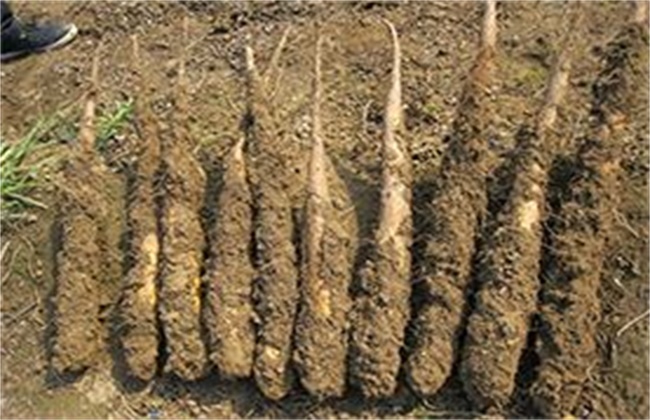
Yam root rot mainly damages the underground tubers of yam. When the underground tubers are affected, water-soaked small spots or yellowish-brown necrotic spots first appear, gradually developing into dark brown lesions. It develops rapidly in hot and rainy seasons, and sometimes the diseased part produces white or pink mold-like substances, namely the pathogen's conidia. After the plant is infected, the leaf color becomes abnormal, the leaves fade green or the leaf margins become necrotic, ultimately leading to plant death. After infection with the pathogen, yams are also highly prone to rotting during storage, often bringing huge losses to growers.
II. Causes
There are many causes of yam root rot. For example, excessive planting density and too small plant and row spacing mean that in July-August, when stems and leaves are lush, air permeability is poor, and disease is very likely to occur when humidity is high. Or continuous cropping, where soil pathogens accumulate in large amounts, or severe occurrence of root-knot nematodes, can also induce root rot. When applying undecomposed farmyard manure or organic fertilizer, pathogens carried in the fertilizer enter the field, which can also cause root rot. Or when planting in heavy clay soil with poor air and water permeability, infection is also very likely. In July-August, rainfall is relatively heavy; when planting in low-lying plots prone to water accumulation or with poor drainage, humidity is high and disease is also likely.
III. Control measures
Pay attention to crop rotation: rotate once every 3 years with crops such as corn, wheat, radish, and watermelon. When planting, choose fertile, loose soil on high ground with low humidity for sowing. When preparing the land in autumn, plow diseased residues into the soil, and after winter freezing and spring sun exposure, kill the pathogens. At harvest, centrally burn diseased residues, weeds, and rotten stems, or take them out of the field for deep burial, to reduce the pathogen population in the field. During the rainy season, pay attention to drainage to lower field humidity, apply more decomposed organic fertilizer, increase soil looseness and permeability, and reduce disease occurrence. In the early stage of disease, root irrigation can be done with agents such as 30% metalaxyl · hymexazol aqueous solution (Ruimiaoqing), 50% carbendazim · thiram 1000-fold solution, and 58% metalaxyl · mancozeb 600-700-fold solution.
The above is an introduction to the control measures for yam root rot. I hope it can help you. To learn more related knowledge, please follow us.