What medicinal herbs are good to plant in autumn? Recommended varieties suitable for autumn sowing
In general, medicinal herbs take a relatively long time to grow, so choosing the right planting time has a certain influence on their growth. If you want to plant in autumn, the plants must first survive the winter, so you must plant medicinal herbs that can adapt to the local climate; and to avoid spending an extra winter in the ground, you need to plant herbs with a relatively short growing period. So let's start the introduction below.
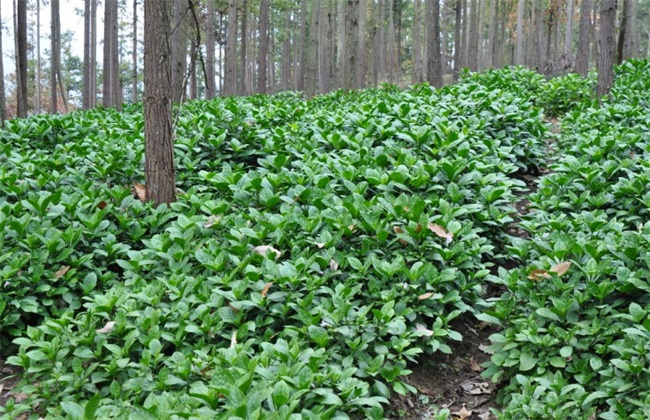
1. Suitable for planting
For planting Isatis indigotica (woad), the seeds can be sown directly, generally in September, and they can be harvested in about 6 months; they germinate quickly and grow fast, and the land can then be used for continuous cropping. Schizonepeta tenuifolia (Japanese catnip) is suitable for planting; sown in September, it can also be direct-sown, and can be harvested in about three months. Plantago asiatica (Asian plantain) can be sown as early as August, and harvested in 5 months; it can be direct-sown or raised as seedlings.
2. Planting methods
For Isatis indigotica, sow in rows; apply 4000 jin of farmyard manure per mu, with a row spacing of preferably 20 cm, a furrow depth of 5 cm, and a soil cover of 2 cm, then spray water to keep it moist. For Schizonepeta tenuifolia, soak the seeds for one day, dry them in a ventilated place, mix them with fine sand and sow, open the same furrows for sowing, and cover with less than 1 cm of soil. For Plantago asiatica, raise seedlings under a frame, or you can skip the seedling stage. Also mix the seeds with fine sand, sow evenly in the seedbed, cover with 1 cm of soil, cover with grass, and remove the cover when 70% of the seedlings have emerged.
3. Planting management
For Isatis indigotica, thin the seedlings when they are 5 cm tall, weed at any time, loosen the soil once during the seedling stage, and after thinning apply 10 jin of urea per mu, mixed with water. Keep the seedlings moist; after transplanting, or after the true leaves of direct-sown plants have grown large, do not water. For Schizonepeta tenuifolia, thin the seedlings when they are 8 cm tall, remove weak seedlings, transplant on cloudy days, loosen the soil during the seedling stage but only the surface layer, and apply nitrogen fertilizer during the seedling stage. For Plantago asiatica, apply topdressing one week after frost, 10 jin of urea per mu, diluted with water; one month after planting, spray 100 g of borax.
4. Growing conditions
Isatis indigotica needs flat, well-drained, deep, fertile sandy loam soil, and grows wild in warm, humid environments. Schizonepeta tenuifolia grows in moist, high and dry environments; the seedlings are afraid of drought and waterlogging, while mature plants prefer somewhat drier conditions. It likes sunny, warm, humid environments. Plantago asiatica likes warm, sunny, humid environments and is suited to fertile sandy loam soil.
There are many medicinal herbs suitable for planting in autumn. Here we have introduced only a few common ones, along with their planting methods, management and basic growing environment requirements, hoping this can help you.