What to Do About Purple-Skinned Garlic Degeneration? Causes and Control Measures Explained
Many farmers growing purple-skinned garlic use their own saved seed garlic, and over time the seed garlic degenerates, showing symptoms such as stunted plants, pale green leaves, and smaller bulbs, with yields dropping year after year, which seriously affects garlic farmers' income. So what causes purple-skinned garlic degeneration? How should it be controlled? Let's take a look.
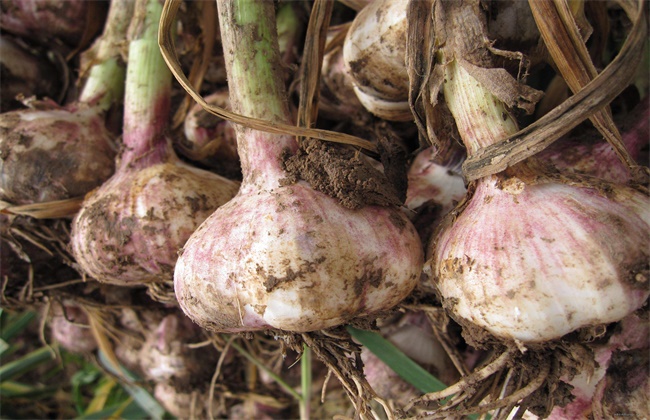
I. Causes of Purple-Skinned Garlic Degeneration
Garlic is a vegetatively propagated crop and does not go through the reproductive cycle of sexual reproduction, which is the main cause of garlic variety degeneration. In addition, improper cultivation methods and harsh climate are also among the causes of garlic variety degeneration. Furthermore, insufficient fertilizer, excessive planting density, and lax seed selection can all cause purple-skinned garlic variety degeneration. In production, farmers often delay the harvest period for the sake of garlic scape yield, waiting until the scapes become thick, old, and fibrous before harvesting, which wastes a large amount of nutrients and also affects bulb development. Viruses exist in garlic plants, and as they accumulate continuously, they cause declines in yield and quality. Dry, high-temperature climates make it very easy for garlic viral diseases to spread, so garlic degeneration caused by viral diseases is also very serious.
II. Control Measures
1. Choose a Good Plot
Select a plot with loamy soil and convenient drainage and irrigation as the seed field, preferably with peanuts, corn, or other crops as the previous crop, and prepare the soil carefully before sowing.
2. Seed Selection
Seed selection should be carried out before 10 a.m. and in the evening during the garlic harvest season, choosing garlic bulbs that have no wounds, pests, or diseases, no rotten cloves, uniformly sized cloves, and a plump, full appearance with consistent color to keep as seed garlic.
3. Virus-Free Propagation
Taking advantage of the fact that garlic shoot tips are virus-free, cut the shoot tip tissue of the young buds inside the garlic cloves for tissue culture to propagate virus-free garlic plantlets, then cultivate the virus-free garlic plantlets under aseptic conditions; after planting, they are propagated as stock seed, and then second-generation seed is produced for production.
4. Reasonable Close Planting
The planting density of the garlic seed field is lower than that of the production field, generally with a row spacing of about 25 cm and a plant spacing of about 20 cm. The sowing period is delayed by 10-15 days compared with the production field. To prevent secondary growth, 20 days before sowing, place the seed in an environment with a relative humidity of 75% and a temperature above 2°C.
5. Timely Harvesting
When the garlic scape emerges from the leaf sheath opening and its upper part begins to bend slightly, it can be harvested. Choose noon and early afternoon on a sunny day for harvesting, and use a scape-pulling tool to pull out the scapes, trying not to damage the pseudostem so that the leaves can continue to provide nutrients for bulb growth. After harvesting, water promptly and loosen the soil at the right time to promote bulb growth.
The above is an introduction to the causes of purple-skinned garlic degeneration and control measures. We hope it helps you. To learn more related knowledge, please stay tuned to us.