How long after planting Davallia can you harvest it?
Davallia is a fern and a traditional Chinese medicinal herb. Its roots have the effects of strengthening bones and tonifying the kidneys, and it is distributed in the Shandong, Jiangsu, Taiwan, China, and Liaoning regions of China. In the past, it all grew wild in mountain forests and rock crevices. Now it can also be cultivated artificially. So how long after artificial planting can it be harvested, and how long is the planting period? Friends who want to know can keep reading.
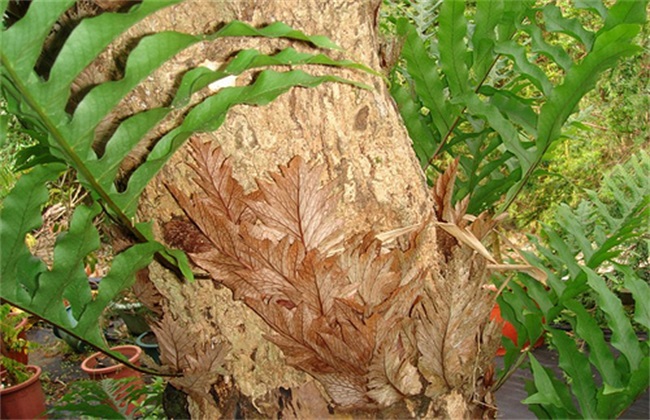
1. Planting and harvesting
Ferns grow very quickly. Generally, after sowing spores 2, the sporophyte can grow out in about two months. However, because the main harvest is the rhizome, the growth of the roots is generally slower. Usually, around May the spores mature and can be sown, in July the sporophyte grows out, and in August the root system is still not well developed. It can be harvested in April of the following year, about one year in total.
2. Propagation methods
Generally, it is spore propagation, which is very fast. Under natural conditions, very few spores germinate, so the spores can be collected artificially, air-dried, made into a sporangium suspension, and sprayed onto sterilized cinder soil. With light exposure, gametophytes gradually form, and after fertilization they become sporophytes, which are then transplanted onto trees for growing. For division propagation, use rhizomes cut into segments, keep the bud points and sporophylls, and place them in rock crevices. Spray water frequently to keep them moist, and they will grow.
3. Moisture retention management
Cultivating Davallia has very strict humidity requirements. After seedlings grow, they must be watered or sprayed every day. If any wilt, take them out and soak them in water. Once the leaves recover, plant them back. If they do not recover, cut off the dead leaves to encourage new leaves. If they first turn yellow and then wither, do not water them; there may be water accumulation and root rot, so take them out, trim the roots, and replant. It is best to water in the morning and not at night, and keep ventilation.
4. Nutrition management
The planting soil should be loose, fertile, and slightly acidic. You can mix it yourself using humus soil, peat soil, and coarse sand, with the most humus soil and less of the others. You can also use fermented compost. The root system is weak, so fertilization should be light and frequent. Use soluble fertilizer and nitrogen fertilizer, but do not use too much, or it will grow leggy and compete with the roots for nutrients. Phosphorus fertilizer must not be lacking, as it promotes root growth; spray potassium dihydrogen phosphate. Apply potassium fertilizer to avoid yellowing.
Davallia can generally be harvested after about one year of planting, but if you want the roots to be larger, you can also delay the harvest. It can be dug up throughout the year. With the spore propagation method, pay attention, because it is different from ordinary plants. In cultivation management, the most important things are moisture retention and fertilization.