Detailed explanation of the key points of sand onion cultivation techniques, even beginners can learn
Sand onion, also called Mongolian leek, mainly grows in the Mongolian, -, Qinghai, and Gansu regions of China, as well as in Russia and Kazakhstan. It is not distributed in the south. It is a seasoning vegetable and can also be used as Chinese medicinal material and animal feed, and it adapts to growing in deserts. So many people cultivate sand onion. Sand onion cultivation is mainly off-season cultivation after artificial domestication, and it can also be planted directly in open fields.
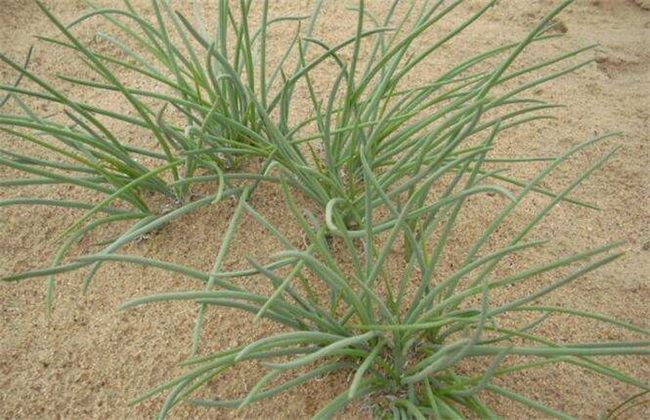
1. Site selection and land preparation
Choose a large, flat piece of land with good ventilation, good light, good drainage, and convenient irrigation; sandy land can be used for planting. Sandy land does not retain water, so when planting artificially, some clay can also be mixed in. Plow the land; plowing does not need to be too deep, about 15 cm is enough. Apply 1000 jin of farmyard manure per mu, mix it with the soil, level the soil, and expose it to the sun for a few days. After disinfection and sterilization, plant.
2. Sowing process
Sowing is carried out from March to May, not during periods of high temperature. Direct flat-field furrow sowing is used. First water the furrow; when the soil is moist, forms a ball in the hand, and no water seeps between the fingers, this level of moisture is suitable for sowing. Sow evenly and broadcast. The seeds are small, and a sowing depth of 2 cm is enough. Shallow covering with soil helps emergence. If the soil is moist, there is no need to water before emergence. In windy places, cover with some grass to prevent the soil from being blown away.
3. Transplanting
In places where wild species exist, wild plants can be dug up in spring and autumn for transplanting. Trim the leaves and leave 3 cm, cut off the old roots, and then divide and plant them. Division transplanting grows very well. For large-scale planting, you can also raise your own seedlings and transplant them. When transplanting, plant in clumps, with one clump every 10 cm. When planting, cover with soil and press firmly, water a little, and then water whenever it dries. When the seedlings grow to more than ten cm, reduce watering.
4. Cultivation management
The base fertilizer is enough for growth. Fertilizer is mainly applied after harvesting seeds. If deficiency symptoms appear during cultivation, supplement promptly according to the plant's performance. Sandy soil does not retain water, so watering is frequent. Each time, water thoroughly, but do not let water accumulate; the root layer can also accumulate water. There are many tenacious weeds in sandy land, so pull them out at any time. In the second year of planting, it blooms in July. Pay attention to preserving water; flooding irrigation can be used. After the seeds are fully mature, do not water. When shedding begins, harvest in time, thresh by hand, blow away impurities, and store.
Sand onion cultivation is mainly carried out in sandy land. The planting site should be fertile, and more watering is needed for moisture. Irrigate and fertilize according to the growth stage. The key points of cultivation techniques are to grasp the key factors and provide an environment based on the unique growth characteristics of sand onion.