How to grow celery seedlings? Timing and methods for raising celery seedlings in autumn
Celery is surely familiar to everyone; it is a vegetable that people very much enjoy eating, and it is widely cultivated in China. Every year in July and August is a good time for growing celery seedlings. Below, let's take a look with the editor at how celery is grown from seed, and when is the best time to raise the seedlings. Let's have a look.
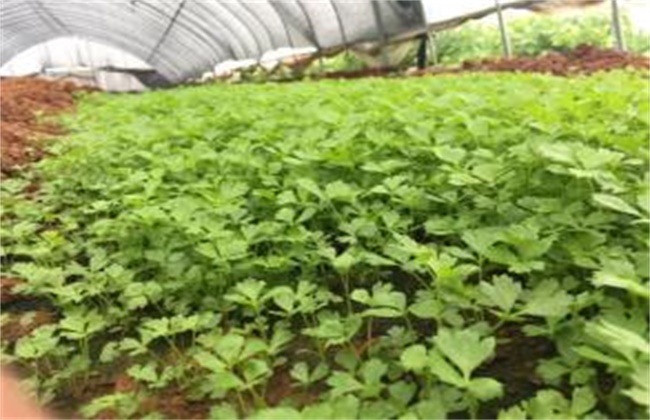
Celery seedling raising time
For spring cultivation, seedlings are generally raised indoors in a greenhouse within January to February, transplanted in March to April, and can be harvested in May to July. For summer cultivation, sowing is generally carried out in March to May, and the seeds need to be soaked for 24 hours before sowing; after the seedlings emerge, thin them out in time, keeping the spacing between seedlings at about 2 cm. When sowing in April, there is no need to cover with film; before the seedlings emerge after sowing, cover with a shade net to help retain moisture. For autumn cultivation, sowing and seedling raising are generally carried out from early June to mid-July, with transplanting from late July to late August. Because the autumn sowing period falls in a high-temperature season, and the suitable germination temperature for celery seeds is between 15-25°C, and it is difficult for them to sprout above 30°C, low-temperature germination stimulation treatment is needed for planting.
Seedling raising methods
1. Seedbed selection
For the seedbed, it is recommended to choose a plot with relatively high sand content, sufficient moisture, and good permeability as the seedling plot. To make the seedbed sufficiently fertile, an appropriate amount of farmyard manure can be spread and evenly plowed into the soil.
2. Raising seedlings
In combination with the local climate, market demand, etc., choose a variety suitable for planting, and subject the seeds to germination stimulation treatment. Before germination, first soak them in clean water, stirring thoroughly during soaking, which helps the plants absorb water fully. After soaking for one day, the seeds can be placed in a warm environment for germination.
3. Key points of germination
During the germination process, be sure to change the water in time, and at the same time carefully observe the condition of the seeds. Once the seeds show white sprouts, they can be sown.
4. Maintain density
The sowing density must be reasonable; generally about 100 kg of seedlings are needed per mu. When sowing, the seeds can be mixed evenly with fine sand and then broadcast, and after sowing cover with about 0.5 cm of fine soil.
5. Seedling stage management
After the celery seedlings grow out, water and fertilize appropriately. If weeds are found in the soil of the planting plot, pull them out in time. If the temperature is too high, remove the film in time; when the temperature is low, some plastic film can also be appropriately covered to help the seedlings grow and develop.
The above is an introduction to content related to the timing and methods of raising celery seedlings. We hope it can help you. If you want to learn more related knowledge, please follow us.