How to grow facing-heaven chili peppers? High-yield cultivation techniques for facing-heaven chili peppers
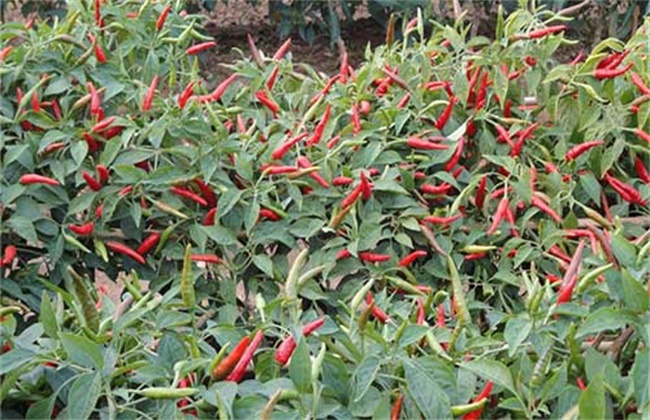
Facing-heaven chili pepper, also known as wangtianjiao, has a bright red color throughout and looks very attractive. Its characteristic is that it is extremely spicy, and precisely because it is so spicy, it is widely used in the market and in high demand. So how should facing-heaven chili peppers be grown to achieve high yields? Come and take a look at the high-yield cultivation techniques for facing-heaven chili peppers with the editor.
1. Sowing preparation
First, select a facing-heaven chili pepper variety with high yield, good quality, resistance to pests and diseases, and wide adaptability, and choose a fertile plot with flat terrain, good ventilation and sunlight, close to a water source, and loose soil. Plow it 20-30 cm deep, allow it to freeze and sun-dry for maturation, then apply base fertilizer. After turning the soil and raking it evenly, mix the soil and fertilizer thoroughly, and make flat beds 1.2-1.5 m wide. The beds are required to be level and straight, with loose, fine soil inside and no clods. Before sowing, in order to increase the germination rate and make the seedlings emerge quickly and uniformly, seed germination treatment can be carried out.
2. Timely sowing
Generally, sowing is carried out on a sunny day in late February or early March. Before sowing, water the beds thoroughly with bottom water. After the water seeps down, mix the plants with 2-3 times their volume of fine soil and broadcast sow them. Make sure the sowing is uniform, then cover with 1 cm of fine soil. The covering should be even to prevent the seeds from being exposed above the ground. After sowing, promptly build small plastic film arched sheds to prevent freezing and increase temperature. One week before transplanting, gradually enlarge the ventilation openings until the film is removed and the seedlings are exposed, so as to lower the seedbed temperature, strengthen seedling hardening, and facilitate seedling recovery after transplanting.
3. Transplanting
Generally, transplanting is carried out in mid-April, with two rows per ridge. For single plants, the spacing should be controlled at about 15 cm; for double plants, the spacing should be controlled at about 25 cm. The transplanting density is 8000-9000 single plants per mu, or 5000 double plants per mu. When transplanting, break the film and punch holes, transplant with soil, water thoroughly, and seal the soil firmly. At the same time, remove diseased seedlings, weak seedlings, mixed seedlings, and variant plants.
4. Field management
Facing-heaven chili peppers should be fertilized according to the principle of combining organic fertilizer with inorganic fertilizer and supplementing nitrogen, phosphorus, potassium, and micronutrients, using formula fertilization. After the transplanting and seedling recovery stage, do not water or water only sparingly to help raise soil temperature and promote root development. The fruits of facing-heaven chili peppers are mainly concentrated on side branches, so 20 days after transplanting, promptly pinch off the growing tips to limit main stem growth and promote side branches, which helps increase yield. After fruit set, gradually increase the amount of watering. The main diseases of facing-heaven chili peppers are anthracnose, phytophthora blight, and viral disease. Anthracnose can be controlled by spraying thiophanate-methyl or a multi-sulfur suspension concentrate; phytophthora blight can be controlled with a multi-sulfur suspension concentrate; viral disease can be controlled by spraying virus A and zhibingling.
The above is an introduction to high-yield cultivation techniques for facing-heaven chili peppers. We hope it can help you. If you want to learn more related knowledge, please stay tuned to us.