Why Can't Armyworms on Corn Be Controlled? Cause Analysis and Correct Prevention and Control Measures
The armyworm on corn is a common pest during corn cultivation, characterized by long-distance migration and concentrated outbreak damage. Many farmers achieve poor control results during prevention and treatment because of the influence of high-temperature weather, which has a huge impact on corn yield. So how should corn armyworms be correctly prevented and controlled? Follow along with the editor to learn about it.
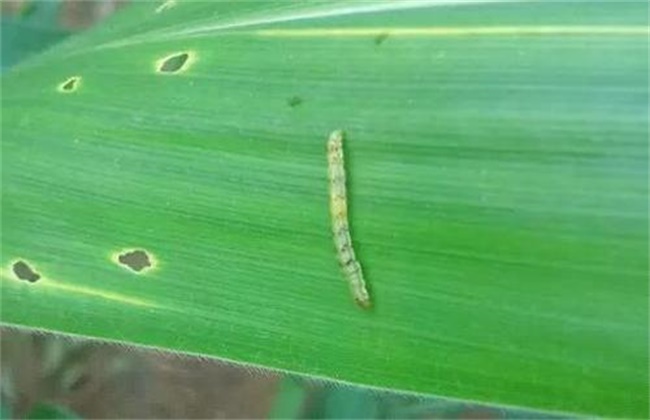
I. Reasons for Poor Control Results
The reason corn armyworms are always poorly controlled is that the timing and measures of prevention and control are inadequate. Generally, corn armyworms migrate from corn fields to peach trees to lay eggs and reproduce, so prevention and control must be carried out after grafting peach seedlings. At this time, the armyworms are in the larval stage, which is the best period for prevention and control. Once this period is missed, control becomes extremely difficult after the pest breaks out. This is because armyworms spin silk to bind surrounding leaves together and wrap themselves inside, making it hard for pesticides to penetrate and difficult to eliminate them.
II. Correct Prevention and Control Measures
1. Physical Control
So-called physical control is manual control. Since armyworms spin silk to bind surrounding leaves together and wrap themselves inside, we can squeeze the affected leaves against each other and directly crush the armyworms to death. For a single plant, this method is time-consuming and labor-intensive. It is fine for small-area planting, but completely impractical for large-area planting. However, it can be used as an auxiliary method.
2. Chemical Control
Chemical control can be divided into biological pesticide control and chemical pesticide control. Among them, biological pesticide control mainly uses Bacillus thuringiensis, which plays an important role in plant disease control and has been widely used in green organic agricultural production. It has good control effects on various lepidopteran pests. Because it is a microbial insecticide, its insect-killing speed is relatively slow, which is also its shortcoming. If the pest population base is large, in addition to increasing the pesticide dilution multiple, it can also be used together with pyrethroid insecticides for a better control effect. For pesticide control, the control formula of emamectin benzoate + chlorantraniliprole + organosilicon adjuvant can be sprayed, used continuously 2-3 times, with each interval of 4-7 days, to control pest damage. This formula has strong quick-acting performance and a long duration of effect. If some ovicides are added, the effect will be twice as good with half the effort.
The above is an introduction to the correct prevention and control measures for corn armyworms. We hope it can help you. To learn more related knowledge, please stay tuned to us.