When is the most suitable time to plant napa cabbage in autumn
Autumn is the most suitable time to plant napa cabbage in the south. In the subtropical regions of the south, it is mainly planted in autumn and winter, and in winter it can either be harvested or left in the ground. After spring, napa cabbage will bolt, and in summer only baby bok choy can be planted. So it is mainly sown in autumn. Therefore, how to determine the sowing time for autumn napa cabbage is a problem that puzzles some growers. Let's solve it together.
1. Planting time
The main time for autumn napa cabbage is sowing around the Start of Autumn, though of course it is best to decide based on the weather. If the temperature is too high, you cannot sow even at the Start of Autumn, and you can postpone it. For late-maturing varieties with a long growing period, you can sow a few days earlier when the weather is suitable. For mid-maturing varieties with a short growing period, sowing a few days later is also fine. After all, seedlings do not grow well in high temperatures. Once the temperature becomes cool, diseases will also decrease.
2. Sowing method
It is best to plant in soil that has never grown cruciferous vegetables. Open a furrow 8 cm deep for sowing. After watering the soil thoroughly, scatter the seeds evenly in the furrow. Cover with about 1 cm of soil, and do not cover with soil that is too thick. Shallow soil covering is enough. About 1 jin of seed per mu is enough. Water every day to keep it moist. If the temperature is high, water in the evening to cool it down, and each watering must soak through.
3. Raising seedlings and transplanting
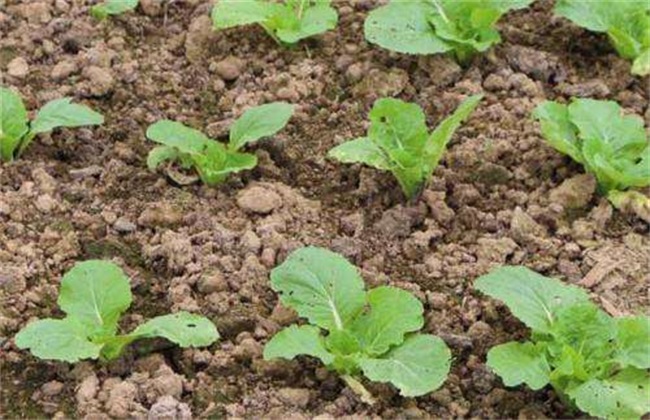
After germination, you only need to keep it moist, and it will gradually grow into seedlings. Thinning is carried out when 2 true leaves have grown, mainly to remove weak and diseased seedlings. When about 5 true leaves have grown, they can be transplanted to the field. Transplant on a cloudy day with no rain, water after transplanting, and then water every morning and evening. Because during the seedling recovery period the roots have not taken hold and cannot absorb water, you must keep them moist so they can resume growth as quickly as possible.
4. Water and fertilizer management
Napa cabbage needs relatively more nutrients, mainly by applying sufficient base fertilizer and using enough farmyard manure, which has a long-lasting effect. Topdressing should be based on the stage. Before transplanting, use 20 jin of ammonium sulfate per mu, watering and fertilizing, mainly to promote growth. After transplanting, use 40 jin of ammonium sulfate per mu, mainly to promote the development of stems and leaves. Just before head formation, apply 30 jin of superphosphate. Finally, in the middle stage of head formation, apply 30 jin of ammonium sulfate.
Autumn is the main time for planting napa cabbage in both the north and the south, and the planting time is generally around the Start of Autumn, when the temperature is suitable. For small-scale planting, direct sowing can be used. For large-scale planting, seedlings need to be raised, which makes it easier to survive. There is no need to fill in gaps in the field when seedlings have not emerged.