A Detailed Guide to Chicory Planting Techniques and Management Methods
Chicory, also known as bitter greens or bitter sow thistle, is a very tender-tasting market vegetable that we often use in our daily lives to make cold dishes or to cook in hot pot. It also has effects such as clearing heat and reducing internal heat, antibacterial, anti-inflammatory, and improving eyesight. Many farmers want to grow it, but do not know how to plant it. So, what are the planting methods and timing for chicory? Let's take a look.
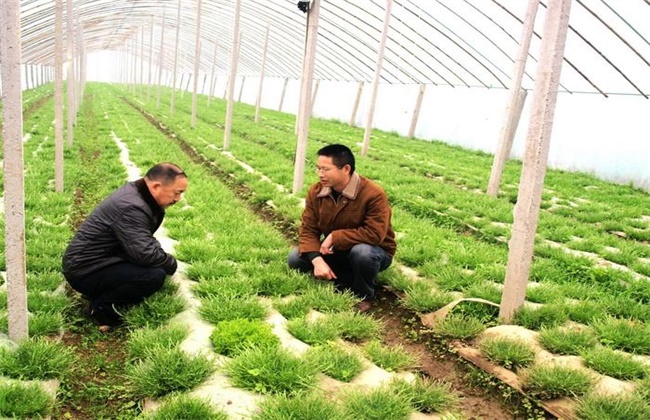
1. Planting time and conditions
Chicory prefers a cool climate and is relatively cold-tolerant. At short-term low temperatures as low as 5-10 degrees, it can still remain green, and the seedlings can also maintain normal green color during overwintering. It has a relatively high demand for fertilizer and water, but is not drought-tolerant, so it is suitable for planting in fertile, loose sandy loam or clay soil. Its growth habits determine that it is suitable for planting in spring and autumn. The temperatures in these two seasons are suitable and more suitable for its growth than summer and winter. When planting, select good-quality seeds in advance, focusing on stable yield and resistance to pests and diseases, so that a high yield can be obtained.
2. Land preparation and sowing
After selecting a good-quality plot, first apply sufficient base fertilizer. Per mu, 1000-2000 kg of decomposed farmyard manure can be applied, then prepare the land and make beds. The bed width is required to be about 80-100 cm, and furrows of about 8 cm should be opened on the bed surface, with the distance between furrows maintained at about 12 cm, then evenly scatter the selected good-quality plants on top. Then cover with a thin layer of soil, about 0.5 cm thick.
3. Seedling stage management
Generally, seedlings emerge 4-5 days after sowing. After emergence, spray water appropriately to prevent the soil from becoming too dry, which is very unfavorable to the growth and development of the seedlings. When the seedlings grow to 4-5 true leaves, thinning or replanting can be carried out. At the same time, combine with cultivating and weeding, promptly remove diseased or weak seedlings and take them out of the field to burn or bury them, to prevent the spread of pests and diseases. When loosening the soil, be careful to move gently to avoid damaging the roots of the seedlings.
4. Fertilizer and water management
During the seedling stage of chicory, a small amount of water can be applied. During the vigorous growth period of stems and leaves, water must be sufficient. If water is lacking, the bitterness of chicory will become too strong. In the later growth stage, the amount of watering can be appropriately reduced. During the plant growth stage, fertilize according to growth conditions. Per mu, 1000-1200 kg of decomposed farmyard manure can be used. In addition, the main pests and diseases of chicory are downy mildew, viral disease, aphids, etc. Among them, downy mildew can be controlled by spraying 500-600 times dilution of 80% Saidefu wettable powder, etc.; viral disease can be controlled by spraying 500 times dilution of 0% Virus A wettable powder, etc.; aphids can be controlled by spraying 800-1000 times dilution of 40% Keyaxing, etc.
The above is an introduction to chicory planting techniques and management. We hope it can help you. If you want to learn more related knowledge, please stay tuned to us.