How to Grow Winged Beans? Detailed Guide to Planting Techniques and Management Methods
Winged bean, also known as goa bean, star fruit bean, or four-angled bean, as the name suggests, has four ridges, similar to a star fruit. It is a legume with somewhat distinctive looks. Its roots, stems, leaves, flowers, pods, and seeds are all edible, truly a treasure from top to bottom, with high economic value. So do you know how to grow it? Let's take a look together below.
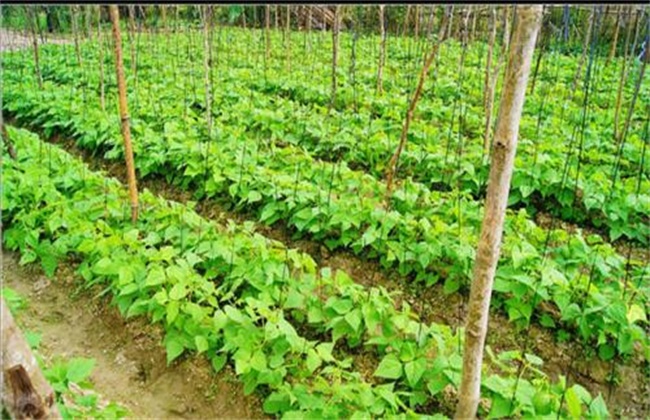
1. Deep Plowing and Land Preparation
As for soil, winged bean is not very demanding, but you must ensure the soil is not too poor, compacted, and free of pests and diseases. If conditions permit, it is best to choose a plot with fertile soil and deep soil layers as the planting site. After the planting site is chosen, proper land preparation should be carried out. In order to improve soil permeability and fertility, and thereby promote better growth and development of winged bean, the soil needs to be deep-plowed to about 35 cm, then the weeds on the ground should be cleared away. After applying sufficient base fertilizer, you can disinfect the soil after deep plowing, effectively killing pathogens and insect eggs, and avoiding disease damage to winged bean growth.
2. Timely Sowing
The sowing time is best chosen after the temperature warms up in spring, because winged bean has poor cold tolerance, so the surrounding temperature should preferably be around 18°C. One week before sowing, prepare the seedbed well. To raise the seedbed temperature, lay plastic film properly and water appropriately. After the water seeps down, make the field ridges well and dig the planting holes. When sowing, place 2-4 seeds in each hole. After sowing, cover with a layer of fine soil and film to keep warm and retain moisture. Before emergence, maintain the temperature at around 28°C, so as to promote the seeds to germinate and emerge as quickly as possible.
3. Transplanting and Field Planting
After emergence, in order to increase field ventilation, the temperature of the seedling bed should preferably be controlled at 25°C, and must not be lower than 18°C at night. When the soil is too dry, water promptly, and as the temperature gradually rises, slowly increase ventilation. When the temperature stabilizes above 15°C, the plastic film can be lifted off. When the seedlings grow 3-4 true leaves, they can be transplanted. Transplanting is best done on a sunny day at around 18°C, and should be done with soil attached to avoid damaging the seedling roots. At the same time, pay attention to the transplanting density.
4. Field Management
After transplanting, carry out regular cultivating and weeding. Winged bean grows very slowly during the seedling stage, and cultivating and weeding can improve moisture conservation. Nitrogen fertilizer should be applied throughout the entire growth period of winged bean. It is very sensitive to nitrogen fertilizer, and its root system has a strong nitrogen-fixing capacity. Once too much nitrogen fertilizer is applied, it can easily cause excessive vegetative growth, thereby reducing the flowering and pod-setting rate. Also water regularly. Winged bean quite likes moisture, and the soil should be kept moist so as not to affect its growth, but more water is not always better. Do not allow waterlogging, so as to avoid root rot, and do a good job of drainage on rainy days.
The above is an introduction to winged bean planting techniques. We hope it can help you. If you want to learn more related knowledge, please stay tuned to us.