What to Do About Winged Bean Flower Bud Drop? Cause Analysis and Control Methods
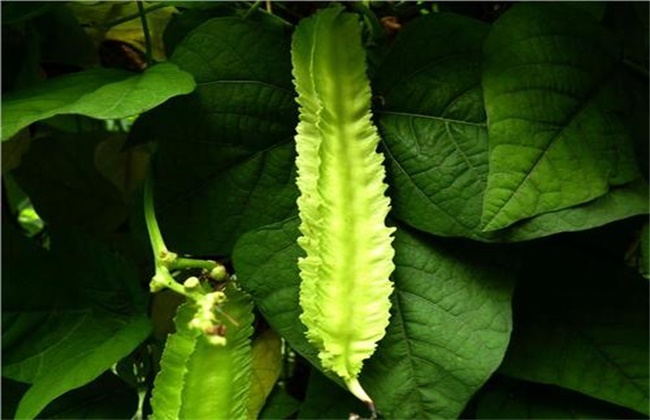
Winged bean, also called winged pea or four-angled bean, is cultivated in Hainan, Guangxi, Taiwan, China and other places. Not only the tender leaves and tender pods are edible, but the tuberous roots are also edible, and its nutritional value is high. However, during the cultivation of winged bean, flower bud drop always occurs, seriously harming the yield and quality of winged bean. So how should it be controlled? Let's take a look.
1. Drop at the early flowering stage
The main reason for flower bud drop at the early flowering stage of winged bean is poor flower bud development caused by high temperatures. In addition, when the vegetative growth of branches and leaves exceeds the reproductive growth, it also causes poor flower bud development, so that they cannot flower or cannot set pods.
Control measures: Sow at the appropriate time, and take cooling measures during high-temperature periods. Plant growth regulators can also be used to preserve flowers and pods, and triacontanol can also be used to promote earlier flowering of winged bean and increase the pod-setting rate.
2. Drop at the full flowering stage
The main reason for flower bud drop at the full flowering stage is that the flow of photosynthetic products is dispersed and the nutrient supply to the flower buds is insufficient. This period is exactly when vegetative growth and reproductive growth are most vigorous. The various development centers compete fiercely for nutrients. At this time, photosynthetic products must flow to stem and leaf growth, flowering and pod setting, tuberous root expansion, and rhizobium nitrogen fixation, etc., which often leads to insufficient nutrients for flower buds and young pods and causes heavy drop.
Control measures: Strengthen fertilizer and water management, use nitrogen, phosphorus and potassium fertilizers reasonably, prune and pinch off the growing tips in time to inhibit the vegetative growth of the plant, and thin out weak flowers so that nutrients can be supplied in a concentrated way, greatly increasing the pod-setting rate.
3. Climatic factors
In different regions, due to differences in geographical conditions, flower bud development is also often abnormal, causing flowering and fertilization to be blocked and leading to drop.
Control measures: Plant growth regulators can be used to prevent pod drop. Commonly used ones include triacontanol and gibberellic acid.
4. Damage by pod borers
In some old vegetable fields or continuous cropping lands of legumes, pod borer damage is severe. Its larvae often choose to bore into and feed on the lower part of the pods, eating the young pods clean and causing pod drop and flower bud drop.
Control measures: To control pod borers, 2.5% beta-cyhalothrin 1500-2000 times solution or 0.36% matrine 1000 times solution can be selected for spray control.
The above is an introduction to the causes of winged bean flower bud drop and control methods. We hope it can help you. If you want to learn more related knowledge, please keep following us.