Should Cowpeas Be Topped? A Detailed Guide to Topping Methods
The most common vegetable in summer is the cowpea. Many people buy some, and besides eating them fresh, they can also be made into pickled cowpeas and dried cowpeas. For vegetable farmers, this is also the harvest season; usually, before one crop is fully harvested, the next crop is already ripe. However, to achieve a high yield of cowpeas, topping the cowpeas is extremely important. So how should cowpeas be topped? Let's take a look.
1. Should Cowpeas Be Topped
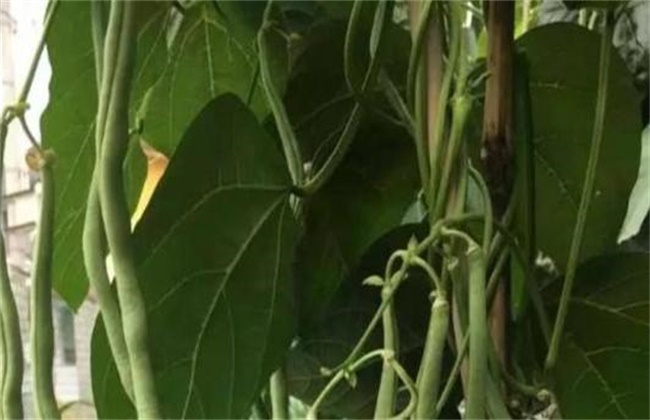
Topping cowpeas, in fact, means removing the head, mainly by removing the apical growing point. To put it simply, it means picking off the topmost part of the cowpea vine. As for whether cowpeas should be topped, it depends on the variety. If they are bush cowpeas, no topping is needed; on the contrary, climbing cowpeas must be topped, as only this can improve the yield and quality of the cowpeas. Summer is hot and rainy, and both the temperature and humidity suit the growth of cowpeas. If vine growth is not suppressed in time, the cowpeas will lack nutrients, resulting in low yields. Therefore, timely topping can increase yield and quality.
2. Topping Methods ⟧7⟧The method of topping cowpeas is actually quite simple. When planting on a large scale, the method of pruning and topping can be adopted: remove all the side buds below the first inflorescence of the main stem, which concentrates nutrients in the main vine and ensures the growth of the main vine. For the side branches at each node above the first inflorescence of the main stem, pinch off the tips after retaining 2-3 leaves, which can promote the development of the first inflorescence. When the main vine grows to 2-3 m, the top of the main vine should also be cut off, which allows the previously retained side branches to grow stronger. If the side branches develop too vigorously, they should also be dealt with. Only through such continuous handling can the cowpeas grow large and long.
The method of pinching yardlong beans is actually quite simple. When planting on a large scale, you can adopt the method of pruning and pinching, removing all the lateral buds below the first inflorescence on the main stem. This concentrates nutrients on the main vine and ensures the growth of the main vine. For the lateral branches at each node above the first inflorescence on the main stem, pinch off the growing tips after retaining 2-3 leaves, which can promote the development of the first inflorescence. When the main vine grows to 2-3 m, you should also cut off the foremost tip of the main vine. This allows the previously retained lateral branches to grow strong. If the lateral branches develop too vigorously, they still need to be dealt with. Only through such continuous handling can the yardlong beans grow large and long.
3. The Principle Behind Topping for High Yield
The cowpea is a herbaceous climbing plant with a spreading growth habit. To ensure that nutrients are fully supplied to the pods, the endless spreading of the vines must be suppressed; only in this way can the harvest period of the cowpeas be extended and a high yield obtained. It should be noted that topping depends on the variety type of the cowpea and the planting method. Generally, as long as the cowpeas are climbing types that go up on trellises, topping must be carried out. Some varieties do not need trellises, and generally these varieties do not need topping either.
The above is an introduction to content related to topping cowpeas. We hope it helps you. To learn more related knowledge, please follow us.