Detailed Explanation of Puncture Vine Planting Techniques and Management Points
Puncture vine, also called white puncture vine, is a plant belonging to the Zygophyllaceae family and is distributed throughout various regions of China. Puncture vine has relatively high economic value; fresh green puncture vine can be used as feed for livestock such as cattle and sheep. Its fruit can also be used as medicine, with various effects such as calming the liver and improving eyesight, dispersing wind and promoting blood circulation, giving it certain economic value. So how should puncture vine be planted? Today, the editor brings you the planting techniques for puncture vine. Let's take a look below!
1. Soil Selection
Puncture vine was originally a kind of wild grass, so it has extremely strong growth ability. Wild puncture vine is not strict about soil requirements and can grow normally in most soils. However, artificial cultivation is mainly for yield, so when planting artificially, soil selection work is still very important. Sandy soil with loose texture, sufficient fertility and strong permeability should be the main choice. After selecting the soil, good land preparation work should be done, removing debris from the soil and disinfecting it. Then apply sufficient fertilizer to improve soil fertility and ensure that puncture vine growth has sufficient nutrients.
2. Propagation Methods
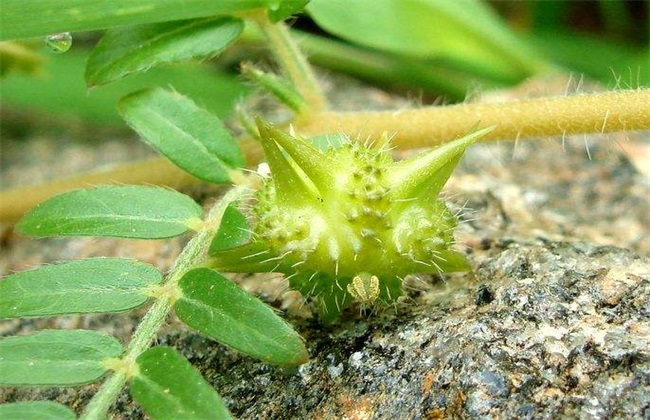
The propagation method of puncture vine is generally based on seed propagation. The seeds of puncture vine mature around August each year. Select plump and full green-white fruits, then dry the fruits in the sun. Before sowing, separate the fruits from the seeds and select pure seeds. The sowing time is in spring each year. Before sowing, water the soil thoroughly, then scatter the seeds and cover with soil. If sowing in holes, the row spacing should be controlled at about 50 cm, and the plant spacing should be maintained at about 35 cm, with sowing holes dug well. Sow about 4 seeds in each hole, then cover with soil and water. The sowing rate per mu should be controlled at about 2 kg. To improve the seed germination rate, appropriate germination-promoting treatment can be done before sowing.
3. Seedling Management
When the seedlings grow to about 5 cm, thinning work should be carried out, promptly removing weak seedlings and seedlings that are growing too densely. Then when the seedlings grow to about 10 cm tall, if broadcast sowing was used, the retained plant spacing should be controlled at about 35 cm; if hole sowing was used, retain about 3 seedlings per hole. If there is a shortage of seedlings, timely replanting should be done. Then during the seedling stage, we should also do good weeding work, because weeds will rob puncture vine of growth nutrients. So timely seedling emergence is necessary. During the small seedling stage, emergence should not be too deep or too heavy, to avoid damaging the roots of puncture vine seedlings. Shallow hoeing of about 2 cm is sufficient.
4. Field Management
In addition to applying sufficient base fertilizer before planting, during the puncture vine planting process we should also appropriately apply additional fertilizer according to the soil fertility situation, with about two additional fertilizations throughout the entire growth period. Around the Mid-Autumn Festival, seed retention work should be done well. To ensure that there is not too much difference in seed maturity time, the growth points of each branch should be pinched off in time. This ensures that the branches and vines can increase the number of short branches and the fruiting rate. Finally, pest and disease control work should be done well, such as white rust, red spider mites, etc., to avoid pests and diseases harming the growth of puncture vine, causing yield decline and affecting planting benefits.
The above is a brief introduction to puncture vine planting techniques. The planting techniques of puncture vine are actually very simple, but if you want to increase yield, then management work is very important, so everyone must pay more attention. That is all for today's introduction. This article is for reference only, and I hope it can help everyone!