What conditions are needed for growing lion's mane mushroom?
Lion's mane mushroom, also called Hericium erinaceus, gets its name because its surface is covered with yellow, downy fleshy spines. It was once a precious dish and has the reputation of being a mountain delicacy. Lion's mane mushroom is a tender and delicious edible fungus with certain spleen-strengthening and calming effects. It has been cultivated artificially for a long time, and we have some understanding of its native environment, so the conditions that artificial cultivation should provide are also very clear. So let's learn about them together next.
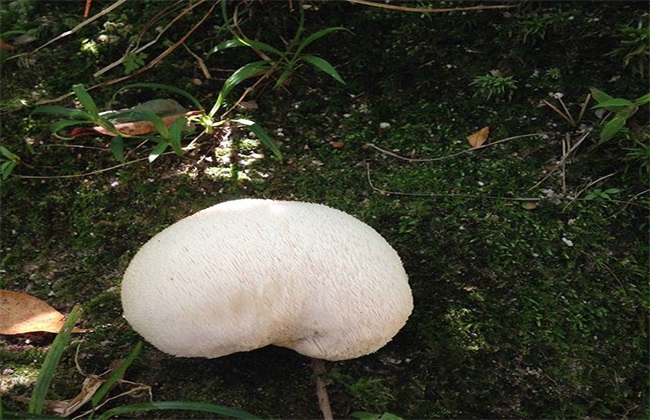
1. Native environment
Its natural growing environment is mainly in broad-leaved forests, coniferous forests, and mixed forests in temperate regions. In China, the main representative environments are the Greater Khingan and Lesser Khingan Mountains in the northeast; the Tianshan and Altai Mountains in the northwest; and the forest regions of the southwest. There are also Jilin, Inner Mongolia, Hebei, Shaanxi, Sichuan, Hubei, Guangxi, and Fujian. It grows naturally in all these places, and the environments differ somewhat, but it definitely grows in places that share common features.
2. Temperature
The mycelium grows best at around 25 degrees, but it can still grow above 6 degrees and above 34 degrees. If it is below 6 degrees or above 34 degrees, growth will stop, but above 30 degrees it will affect mycelial growth, causing slow growth and aging. Generally, mushrooms are easily formed at 20 degrees, and the fruiting bodies formed from 16 degrees to 20 degrees are the best. Below 14 degrees, the fruiting bodies are ugly in color and low in use value.
3. Moisture
Generally, sawdust needs to maintain a moisture content of 55%, cottonseed hulls 60%, and sugarcane bagasse about 65%. But generally the moisture content should not exceed 65%. It is usually between 60% and 65%. Of course, there are exceptions; for example, sugarcane can have a somewhat higher moisture content. If the moisture content is too high, there is no oxygen, growth slows, and it easily ages; if the moisture content is low, growth is affected and the water needs cannot be met. So moisture must be balanced.
4. Air
For edible mushroom cultivation, unlike growing vegetables in the open field, the environment is generally relatively enclosed, so a good air environment is needed. They absorb more oxygen and release carbon dioxide, and after a period of time the carbon dioxide must be released and oxygen absorbed. Frequent ventilation is needed to keep the carbon dioxide content in the air below 0.1%.
5. Light
No light is needed; it grows in darkness and can also grow well under weak light. Once light intensity increases, growth slows. However, scattered light is needed to form fruiting bodies, and some scattered light is also needed when the fruiting bodies expand. If the light is too strong, growth slows and yield decreases. So although it can grow in darkness, some scattered light at certain stages is very good.
The artificial cultivation environment for lion's mane mushroom cannot compare with the natural environment; this is inevitable. But when artificially cultivating lion's mane mushroom, conditions that do not affect growth should be provided as much as possible. This can ensure good growth as well as yield.