Detailed Guide to Perilla Cuttings: Even Beginners Can Learn
Perilla is a herbaceous plant with a distinctive fragrance. It is now commonly used as a spice and can also be used as medicine. Perilla has a long history of cultivation and consumption. Generally, perilla is grown from seeds to raise seedlings, but in fact, cuttings can also survive now, and they are not difficult to handle and easy to cultivate. So how should perilla be propagated by cuttings, and what method should be used? Let's take a look right away.
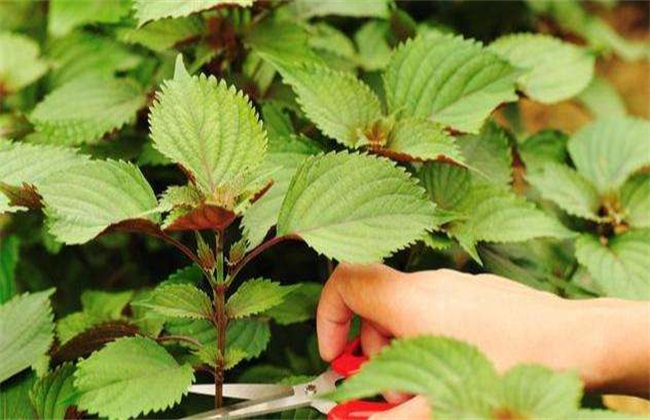
1. Preparation for Cuttings
The time for cuttings can roughly be spring, summer, or autumn, as long as the temperature is suitable; only the survival rate differs. Specifically, when the plant grows side branches and the side branches have developed well, with a certain thickness and without severe lignification, branches can be taken for cuttings. For ordinary home growing, prepare containers and potting soil. For large-scale cuttings, prepare by turning the soil and applying fertilizer, and make a seedbed. Choose sandy loam soil for cuttings. The cutting branches should be robust, free from pests and diseases, with 4 nodes and short internodes.
2. Cutting Method
Choose good side branches, cut them off with a small knife in one stroke, remove the lower leaves, and keep about two small upper leaves. The cuttings need to have their wounds air-dried first, so that when they contact the soil they root easily and do not rot easily. After that, soak the lower end of the cuttings in a rooting powder solution to help rooting. Then they can be inserted into the soil. The insertion depth is about 5 cm, not too deep, and the nearby soil needs to be pressed firmly.
3. Care After Cutting
For care after cutting, suitable temperature and moisture need to be maintained. The temperature should generally be kept between 20 and 25°C, and not exceed 30°C. Air humidity can be increased somewhat by misting more, and soil humidity should be around 65%. One week after cutting, when the wounds have basically healed, they can be exposed to light. Before that, if in the open field, shade with a shade net; if in pots, place them in a cool, ventilated corridor with scattered light.
4. Precautions
Note that before cutting, the soil needs to be loosened and watered, which makes insertion easier, allows close contact with the soil, and prevents the lower end from becoming fuzzy. Fuzzy ends do not root easily. If after several attempts the cutting has not been inserted well and the end has become fuzzy, cut off the lower end. The lower cut should be slanted. The upper end with leaves does not need to be cut. Note that after many roots have formed, dilute fertilizer water can be applied appropriately. The cutting soil needs to be turned and sun-dried, and sprayed with chemicals for disinfection. Later, water once every two days, gradually extending the interval.
Perilla is a semi-lignified herbaceous plant, and cuttings root easily, but attention must still be paid to providing a suitable environment. In extreme dry weather, it is very difficult for them to survive and most will wither and die. Therefore, cuttings need moisture retention and warmth retention.