How is cotton cultivation managed? High-yield cotton cultivation techniques
Cotton is an important cash crop in China, and to achieve high yields of cotton, management work must be done well during each growth stage of the cotton planting process. Why is this important? So how should cotton be managed during cultivation? How can high yields be achieved? Let's take a look together.
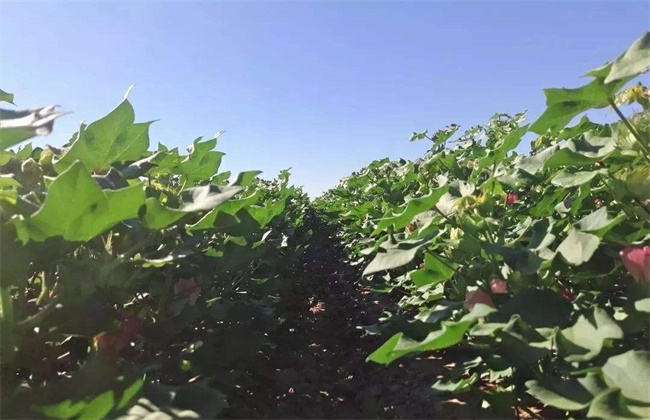
1. Pruning and topping
The topping time for cotton starts in early to mid-July and ends before mid-August. Pruning and topping at this time, on one hand, is to remove rampant branches, water sprouts and side tips, and on the other hand, is to remove the clustered tips on the middle and lower parts of the plant. The purpose is to shape the plant type, remove apical dominance, improve ventilation and light conditions in the field, and reasonably distribute nutrients, so as to enhance the root system's absorption capacity, promote more boll setting and larger bolls during this period, and reduce the occurrence of rotten bolls. However, when topping and pinching, note that plots with high planting density and weak growth should be topped early, while plots with low planting density and vigorous growth can be topped appropriately later.
2. Strengthen fertilizer management
The fertilization principle for cotton is light application of seedling fertilizer, steady application of bud fertilizer, heavy application of flower and boll fertilizer, and supplementary application of top-covering fertilizer. During the flower and boll stage, the demand for fertilizer is relatively large. When most plants are flowering, apply 20-30 kg of compound fertilizer per mu. For plots with insufficient base fertilizer and poor soil fertility, apply early. At this time, mainly strengthen the supplementary application of top-covering fertilizer to prevent premature aging due to fertilizer deficiency in the later period, so as to promote more boll setting and increase boll weight, especially when the flower and boll fertilizer is insufficient, the top-covering fertilizer should be applied in time. Before mid-August, apply 6-7 kg of potassium fertilizer plus 10-15 kg of urea per mu. For plots deficient in potassium, the fertilizer amount can be appropriately increased. When fertilizing, it is best to change broadcasting to trenching or banding, and topdress between the wide rows. Being too close to the roots can easily cause root burning and premature aging. This fertilization method is more conducive to exerting fertilizer efficiency, nourishing the roots while protecting them. In addition, foliar spraying should be carried out before and after cotton topping. In the later period, the root absorption capacity of the plant is weak, and foliar spraying can provide sufficient nutrient supply for the cotton plant, ensuring the smooth development of cotton bolls.
3. Water timely to prevent drought
Cotton has a long growth cycle and a large water requirement. When watering, it should be flexibly determined according to weather, soil moisture and growth conditions, especially during the flower and boll stage, when the water requirement can reach 45%-65% of the total water requirement. Generally at noon, when the top leaves of the plant appear wilted, it indicates a water shortage, and watering should be done in time. If conditions permit, drip irrigation can be used; if not, trench watering can be adopted. Watering is best combined with fertilizer flushing, and best done before 10 a.m. or after 4 p.m. In addition, it should be noted that in August, with high temperatures and strong light, cotton is in the boll-setting stage, and water consumption is relatively large, making autumn drought very likely, so timely watering is needed. Also, after a long drought, applying large amounts of water or sudden heavy rain can cause "sudden death premature aging" of cotton, which should be noted.
4. Strengthen pest and disease control
The main pests and diseases of cotton also include cotton bollworm, red spider mite, white spider mite, summer aphid, red leaf stem blight, verticillium wilt and fusarium wilt, etc. Targeted measures should be taken for different pests and diseases. For example, emamectin benzoate and chlorantraniliprole can be used to control cotton bollworm; spirodiclofen + pyridaben can control red spider mite; carbendazim, hymexazol, kehuangku and other drugs can control fusarium wilt. When spraying, it is best to choose the period from 4 p.m. to evening, and focus on spraying the back of the leaves.
The above is an introduction to content related to cotton planting management. We hope it can help you. If you want to learn more related knowledge, please follow us.