How to cultivate ginger sprouts? Planting methods and key technical points
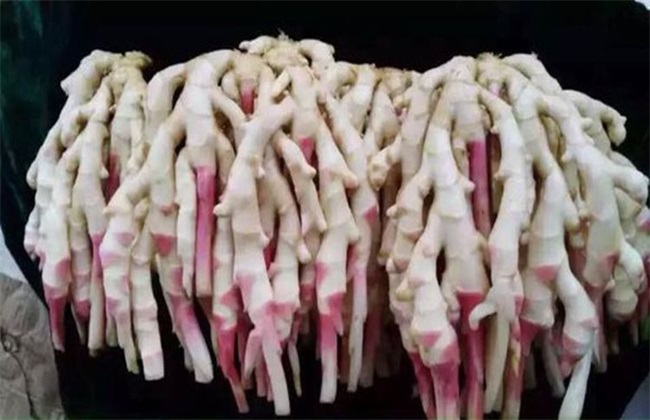
Ginger sprouts are the young shoots that grow after ginger is cultivated. Ginger sprouts are tender and can be stir-fried as a dish or made into pickles. There is now a certain scale of cultivation. How are they cultivated now, and what conditions are needed for cultivation? What methods are used for cultivation? How can high-yield cultivation be achieved? What should be noted in cultivation? These are all questions that growers care about. Once you learn the cultivation method, you can actually grow them at home yourself. So next, the above questions will be answered one by one.
1. Prepare seed ginger
Choose ginger with good color, no disease, thick flesh, many visible bud eyes, no mold, and good storage as seed ginger for cultivation. The selected seed ginger needs to be treated and disinfected. Soak it in a 150-fold aqueous solution of 40% formaldehyde to eliminate pathogens. After that, it needs to be sprouted using wet sand. Wash the fine sand clean, disinfect it, and then bury the seed ginger in the sand. Keep it moist. Cover the outside tightly with plastic sheeting. Choose a greenhouse for this, and keep the temperature at 25 degrees. Buds will generally appear in about 3 weeks.
2. Seedbed preparation
Before planting, prepare deep, loose sandy loam soil, and apply about 3000 jin of fermented and disinfected farmyard manure per mu. After burying it into the soil, finely prepare the land and make the seedbed. The seedbed should be about 1 meter wide; it does not need to be too wide. It is worth noting that after making the seedbed, you can first water it thoroughly, and also use plastic film to keep it warm. Sowing can only be done after the temperature rises above 15 degrees. Of course, you can also sow directly after the outdoor temperature stabilizes above 15 degrees, in which case no film covering is needed.
3. Planting management
Ginger sprouts use soil culture or sand culture, but both are blanching cultivation, and the ginger sprouts produced are yellow and tender. Sow in rows in the seedbed, with a plant spacing of about 5 cm. Open furrows 10 cm wide directly in rows, with the depth adjusted according to the ginger pieces. After sowing, also cover with 5 cm of fine sand. Likewise, plastic film needs to be covered to increase temperature, so sprouts grow much faster. When the ginger sprouts begin to emerge from the soil, build a small arched shed, remove the plastic film, and cultivate with light blocked. When the ginger sprouts grow to 5 cm, they can be harvested.
4. Precautions
When the sprouts grow to about 5 cm, harvest them promptly. If not harvested, they easily become old and tend to grow into plants. During cultivation, avoid high temperature and high humidity, as the ginger pieces easily rot. Cultivate away from light and do not allow strong light. Note that if the price of cultivated ginger sprouts is poor, you can also thin some out and continue cultivating them as ginger, but then there is no need to block light.
Ginger sprouts are a product of blanching cultivation, somewhat similar to yellow chives. Cultivation must follow the requirements so that the quality of the output is high. Generally, cultivating ginger sprouts will not cause losses. They can continue to be converted.