How to prevent and control the dead plant phenomenon in ginger
The phenomenon of dead ginger plants is very common for many growers, and what is commonly seen is patches of dead plants. Dead plants occur severely in soil that has been planted for many years. In fact, ginger dead plants are mainly caused by diseases. Of course, there are also some environmental triggers. So to treat the dead plant situation, how should it be treated? Next, let us look at the causes and understand the treatment methods.
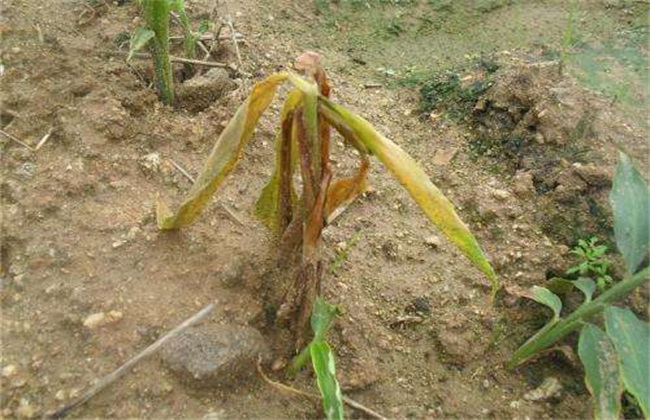
1. Bacterial wilt
Bacterial wilt is ginger blast, and people usually call this disease simply rotten ginger. The symptoms of the disease show that the ginger pieces turn dark brown, then gradually become yellowish brown and begin to rot, and after severe rotting there is white rotten juice with a foul smell. After the disease occurs, the plant gradually loses green color, withers, and finally falls over. If a small number of diseased plants are found, they can be dug out and burned, the soil disinfected, and the whole field sprayed with chemicals. If quite a few have occurred, you can use a 20% Yekuzuo wettable powder 800-fold solution, or 20% quinoline bactericide aqueous solution for root irrigation treatment. Root irrigation is about once a week, and more than three times gives a good effect.
2. Fusarium wilt
Ginger Fusarium wilt is a soil-borne bacterium, mainly caused by the strain and latent bacterial infection in the soil. The disease occurs severely in damp and shady environments. After the disease occurs, the ginger pieces turn brown and rot. Unlike ginger blast, they have mycelium, and the rotting ginger pieces have transparent juice and no foul smell. The aboveground part will eventually also die. Use a 50% carbendazim 800-fold solution or a 70% thiophanate-methyl wettable powder 800-fold solution for root irrigation. Root irrigation can be done once every 5 days, and irrigating more times gives a more obvious effect.
3. Root rot
After the disease occurs, yellow-brown lesions appear on the stems and leaves, which later rot into a water-soaked green. Then it continues to infect downward, gradually rotting, and finally the aboveground part withers and dies. The inside of the stem at the base also rots, and the diseased parts all have white mold-like matter. Seed ginger carrying bacteria, bacteria hidden in the soil, and rain cause repeated infection. Use chemicals such as metalaxyl and copper quinoline for treatment, also by root irrigation. Once a week, about three times.
4. Other reasons
Generally continuous cropping, or too many rounds of continuous cropping, seed ginger carrying pathogens, as well as excessive application of nitrogen fertilizer and uneven watering, will all worsen the dead plant phenomenon. They cause diseases that can lead to dead plants. Too much humidity and water accumulation will worsen the occurrence of Fusarium wilt, and high temperature and high humidity will also worsen the occurrence of ginger blast. Some mold-like matter occurs because of high humidity, and rain will repeatedly worsen the disease.
The dead plant phenomenon in ginger is mainly caused by infection with diseases, and some adverse environmental factors will worsen the diseases and cause severe dead plant situations. But generally they can all be treated reasonably.