When to Plant Purple Flowering Stems? A Detailed Guide to Planting Time and Methods
Purple flowering stems, also known as purple cai-tai (Brassica rapa var. purpuraria), have a long history of cultivation and were already famous over a thousand years ago. They are a specialty vegetable of China. Different planting times produce purple flowering stems with different flavors. So how should purple flowering stems be planted? Let's find out together.
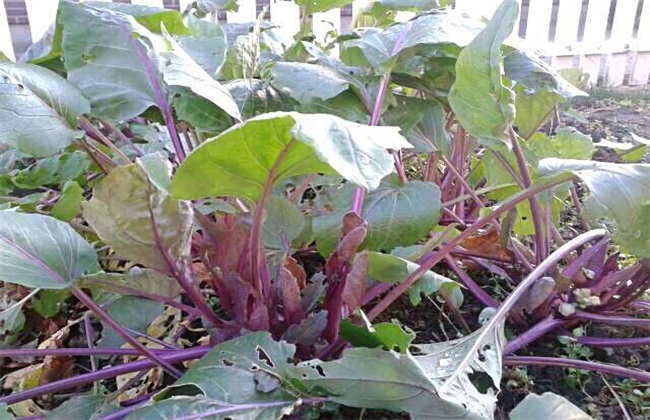
1. Sowing Time
Generally, sowing is done from July to late September, with late August being the best time. The earlier the sowing, the more difficult the seedling raising, the higher the mortality rate after transplanting, the lower the yield, and the more bitter the resulting flower stems. If sowing is delayed, fewer seedlings die, but the harvest period is shortened, reducing the number of harvests and affecting yield.
2. Seedling Stage Management
The seedbed should be deeply plowed and leveled. Sow 1-2 grams per sq m. To prevent disease, chlorothalonil can be mixed with fine soil and broadcast. Keep the soil moist before emergence. After emergence, during hot and dry weather, water in the evening. Also watch for pests such as aphids, striped flea beetles, and diamondback moths. The seedling age for early-maturing varieties is 20-24 days; exceeding 24 days may cause bolting in the seedbed or bolting after transplanting before the rosette forms. For mid-maturing varieties, a seedling age of 25 days is ideal, and for late-maturing varieties, one month is ideal.
3. Transplanting
The transplanting site should be prepared at least 10 days before transplanting, generally with two rounds of plowing and harrowing, then furrowing and making beds. Apply sufficient base fertilizer before transplanting: 2500 kg of decomposed farmyard manure or 100 kg of compound fertilizer per mu is suitable. Water thoroughly the day before transplanting to make seedling removal easier. When removing seedlings, it is best to transplant with soil; if soil cannot be retained, try not to damage the roots, and transplant immediately after removal. Seedlings should not be planted too deep, to avoid covering the growing point. Water promptly after planting, and after finishing a plot, water thoroughly once more, but avoid flood irrigation. Reasonably control plant and row spacing to ensure good air circulation. If early bolting occurs, the main stem can be removed and nitrogen fertilizer appropriately increased to help the plant recover.
4. Field Management
Keep the soil moist throughout the growing period. When leaves show water-deficiency wilting, water promptly. Apply topdressing 4-5 times during the growing period. Ammonium bicarbonate is not recommended, because fertilizer and water are closely related to flower stem formation. Sufficient fertilizer and water are needed before and after budding to ensure flower stem formation, especially for early-maturing varieties, which require an ample supply. Also pay attention to disease prevention in purple flowering stems; the main diseases include downy mildew, soft rot, viral disease, black spot, and clubroot, all of which need attention.
The above is an introduction to the planting time and methods for purple flowering stems. We hope it helps you. For more related knowledge, please stay tuned to us.