When to Harvest Anemarrhena asphodeloides? Analysis of the Best Harvest Time
Anemarrhena asphodeloides is a perennial herbaceous plant and also a medicinal herb. It is now cultivated in various places because of its strong adaptability to growth, generally able to grow on barren hills and desert land. This has also made it popular among many growers, as it is easy to keep alive and manage. When growing Anemarrhena asphodeloides, the main harvest is its underground roots for medicinal use. However, some people are not quite sure when to harvest it after planting, so we will now introduce Anemarrhena asphodeloides.
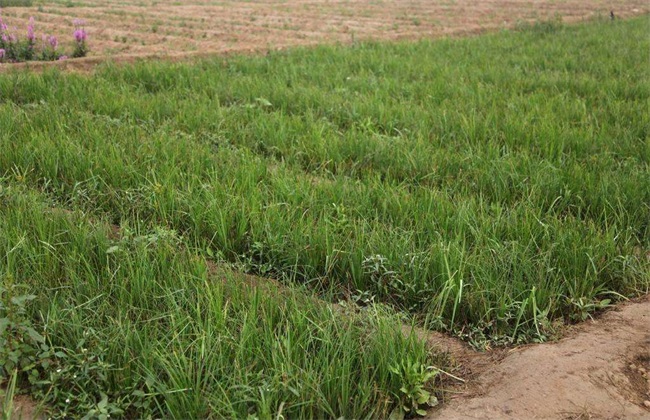
1. Harvest Time
Anemarrhena asphodeloides is generally not a medicinal herb that can be harvested after just one year of planting. Because it is a perennial plant, the underground rhizome must be grown for several years before it can be harvested; otherwise, its growth and development will be insufficient and there will be no yield. Generally, it may need to grow for about 3 years. However, those grown from seed may need 3 to 4 years, and sowing should be done in spring and autumn, when it is warm. Those propagated by division may be harvestable in two years. But the longer the growing time, the more rhizomes there are and the higher the yield.
2. Sowing Method
The seeds generally mature in late July, and the ripening time is not fixed; specifically, it depends on whether the seed coat changes color and dries out. Harvest mature seeds, take out the grains, clean impurities from the seeds, and select good seeds, plump ones with good color. When selecting seeds by water, floating seeds cannot be used. The sowing time is from late March to April in spring, and from September to October in autumn. For sowing, level the soil, then open furrows at intervals and sow evenly. Some drainage ditches can be opened in the land to divide the soil surface. Do not cover with soil too deeply; 4 cm is enough. Lightly compact the soil and water thoroughly.
3. Division Propagation
The aboveground part of Anemarrhena asphodeloides is a clustered plant made up of many plants, so it can be propagated by division. Plants can be separated directly from the old plant for planting, with as few roots as possible, and the roots can be harvested. Plant directly on ridge rows, with a plant spacing of about 5 cm per plant, a ridge row width of about 25 cm, and furrows of about 10 cm. Planted this way, it will later begin to develop roots and plants. Before planting, cut off residual roots, old roots, and rotten root systems, dip them in disinfectant and rooting powder, and then plant. After direct planting, compact the nearby soil and water thoroughly.
4. Management Work
After planting, as long as it has not yet resumed growth, it is enough to keep it moist. After growth is stable, or after sowing and sprouting, pay attention to appropriately applying dilute fertilizer water to promote growth. After rain in spring and summer, pay attention to weeding, and combine weeding with shallow loosening of the soil, without injuring the roots. When roots begin to develop, topdress. Apply about 60 jin of compound fertilizer per mu of land. Fertilization is mainly done by loosening the soil. Do not apply excessive fertilizer. Do not fertilize on dry sunny days; fertilize just after rain when the sky clears.
Anemarrhena asphodeloides can only be harvested after several years of cultivation, and the longer the growing time, the higher the yield. Therefore, after planting, the cultivation and management period is relatively long. Planting is mainly carried out through the above two methods.