A complete guide to honeysuckle planting techniques, easy for beginners to get started
Honeysuckle is a common plant in rural areas from summer to autumn. Some farming families pick it to sell as medicinal material, and some use it to make tea. It is generally wild, but honeysuckle can actually also be cultivated artificially. After planting, the yield is relatively high, and its growth is very stable. Are there techniques for planting honeysuckle? There actually are, and the techniques are the content I will discuss in the following article. Friends who want to learn more can keep reading.
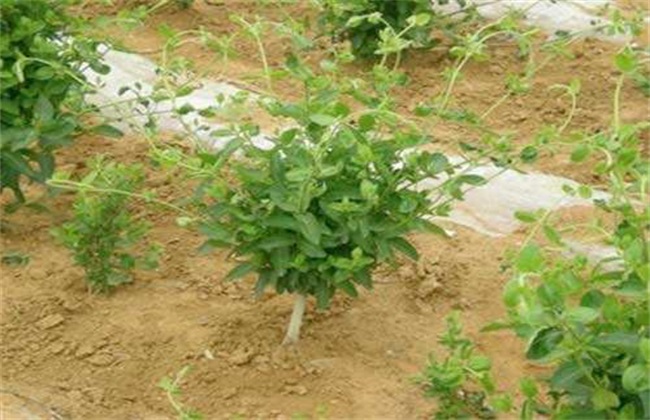
1. Planting time
It can generally be planted in spring and autumn, for example spring and summer are from February to June, and autumn is from September to December. Before planting, pits need to be dug in advance, generally with a plant spacing of 1 m and a row spacing of about 1.5 m to 1.8 m. Dig the pits 40 cm deep. Before planting, the cleared land should be filled with fine soil. After planting, it must be compacted, and the water must be watered thoroughly, roughly until the soil is completely moist and the water no longer flows out of the pit. After that, water to keep it moist.
2. Topdressing
In spring, loosen the soil and open furrows to apply fertilizer. For row planting, just open straight furrows to apply fertilizer, applying 2 to 3 jin of farmyard manure and 1 jin of compound fertilizer per plant, and apply fertilizer evenly according to the number in each row. Wait until August and apply topdressing again, mainly nitrogen fertilizer; using more than 30 jin of urea per mu is enough. In summer, when mainly applying fertilizer, weeds must also be removed; summer rain is good, and grass grows vigorously. Entering winter, apply fertilizer once to improve cold resistance, use compost, and earth up the soil.
3. Disease control
Common pests are aphids and longhorn beetles. Aphid control is mainly during the high-temperature period in summer, controlling adults and larvae together, using imidacloprid for control; for longhorn beetles, use 40% omethoate emulsifiable concentrate and 50% phoxim emulsifiable concentrate for control. A common disease is powdery mildew, which mainly harms the leaves; after being harmed, the leaves develop white powder and cannot carry out photosynthesis. The most commonly used treatment is triadimefon.
4. Plant adjustment
Keep the main trunk and then keep 5 main branches; this is a suitable plant structure, but to maintain this structure all the time, it is necessary to remove new buds, or to prune branches. After one year of growth, the main branches can be replaced, and new branches need to be selected and kept. During the process of growth preparing to bloom, the main thing is to concentrate nutrients; it is only necessary to prune dense, thin and weak, leggy, and flower-budless branches to control balanced growth. For trailing branches, control the growth length, and pinch off the growing tips of the main trunk and main branches.
There are techniques in all aspects of honeysuckle planting, but no matter how much is said, it mainly depends on actual production operations and the accumulation of real experience; theory is only a reference and foundation. I hope this can help everyone.