What to Do About Low Bitter Melon Yields? Cause Analysis and Solutions
Bitter melon tastes quite bitter, but its heat-clearing and summer-heat-relieving effects are extremely powerful. It is generally eaten in summer, which means planting in spring, so that it reaches the market right in summer and creates relatively high economic value. However, many farmers report that their bitter melon yields are low, so what should be done? Let's take a look together.
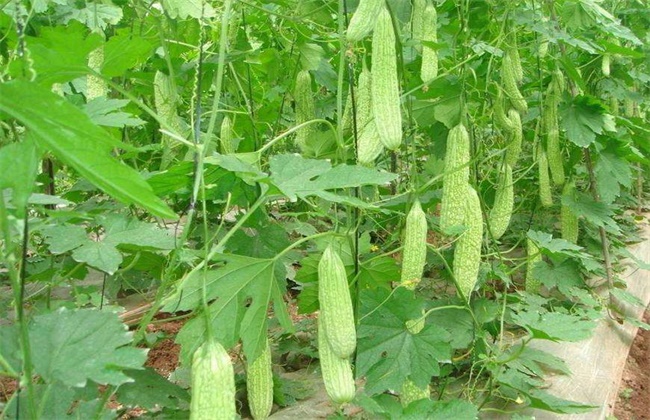
1. Planting Time
Bitter melon is generally sown in March, and some growers first raise seedlings in a greenhouse or a warm house before transplanting, so sowing can be brought forward to February. In the north, sowing is generally done in greenhouses from late March to early April, and planting out can be done in May. In the Yangtze River basin, sowing is generally around mid-March each year, with planting out in mid-April; for summer, sowing is done between April and May; for autumn, sowing is done in July and August. If conditions allow, it can also be cultivated in winter.
2. Temperature Regulation
Summer temperatures are relatively high, so the first management task for bitter melon is temperature regulation. Bitter melon likes warmth and light. During the fruit-setting stage, bitter melon is quite sensitive to temperature changes. Daytime temperatures should be kept at around 28 degrees and should not be too high, while nighttime temperatures should be maintained at around 20 degrees. If they fall below 20 degrees, flower bud differentiation will be hindered, the flowering and fruiting rate of bitter melon will decline, and growth will be uneven. In summer, while ensuring temperature, there should also be proper ventilation and light transmission to ensure normal growth of bitter melon.
3. Watering Management
In summer, bitter melon grows quickly and consumes more nutrients. As temperatures rise in the middle and late stages, the leaf area becomes larger and larger and transpiration is very strong. To meet the plant's demand for fertilizer and water during growth and development, fertilizer and water management must be strengthened, and sufficient water should be applied at planting. During the vine-throwing stage, water is generally controlled for 10-15 days to prevent vegetative growth from being too rapid. Half a month later, it enters the flowering and fruiting stage; to promote fruit growth and development, watering should be done in time. Note that watering should follow the principles of watering the fruit but not the flowers and applying small amounts of water frequently, instead of flood irrigation. During peak flowering, do not water when there is no drought; when fruit is setting, water lightly to prevent flood irrigation from causing soil compaction and poor aeration, which affects the root system's absorption capacity.
4. Field Management
Field management is also an important aspect affecting bitter melon yield. During fruit growth and development, bitter melon has a relatively high demand for fertilizer, so a sufficient supply of fertilizer must be provided to help it grow better. About one week after the seedlings are planted out and the plants have grown to about 20 cm, the first topdressing can be applied. Another topdressing can also be applied when the female flowers open and before the fruit is harvested. In addition, pay attention to setting up trellises and guiding the vines, and tidying the branches and leaves so they grow better.
The above is an introduction to what to do about low bitter melon yields. We hope it helps you. To learn more related knowledge, please keep following us.