What are the symptoms and control methods of Chinese cabbage soft rot?
Chinese cabbage soft rot is a devastating disease in the production of Chinese cabbage (napa cabbage). Once it occurs, it can cause entire patches of crop failure, with enormous harm, often causing huge losses to farmers. So what symptoms does Chinese cabbage soft rot have? And how should it be controlled? Let's take a look together.
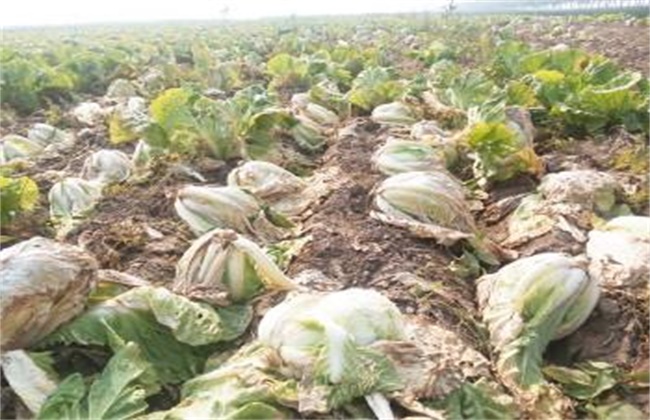
1. Disease symptoms
The first parts to be affected are the leaf stalks and root tips in contact with the ground. The affected parts of the leaf stalks become water-soaked, the outer leaves lose water and wilt, and eventually the entire plant dies. When the disease occurs in the late growth stage, water-soaked spots first appear, the leaves become semi-transparent and look like oiled paper, and finally the entire plant softens and rots, giving off a foul odor. When pests such as striped flea beetles and sugarcane black crickets are severe, the pathogen invades in large numbers through the wounds, worsening the disease, and sometimes soft rot occurs during transport.
2. Disease pattern
It is caused by pathogenic bacteria of the genus Erwinia. Under conditions of 20 degrees and high humidity, they form colonies centered on the rhizosphere soil of host plants and survive long-term. When it rains, the bacteria spread by rain splash, first invading through wounds on the lower leaves and leaf stalks of Chinese cabbage and through feeding holes of pests. In windy weather, bacterial dust is also blown onto the vegetable plots, and some plants can also become diseased starting from the upper parts. The pathogen often spreads with surface water flow, and when it encounters host plants it multiplies rapidly; even after the soil is disinfected, the bacterial density immediately returns to its original level.
3. Control methods
First, choose varieties suited to the local climate, and preferably buy seeds from legitimate sources. When choosing a planting site, avoid plots whose previous crop was a cruciferous crop, and before sowing, properly sun-dry the field and carry out disinfection treatment. The sowing time should also be determined according to the variety and local climate; generally, early-maturing varieties are planted in July-August, and mid-to-late-maturing varieties in August-September. The seeds to be sown should preferably be disinfected. In the early stage, pay attention to pest and disease control to avoid mechanical damage to the Chinese cabbage, which would give the pathogen an opportunity to invade. In the early stage of soft rot, control it promptly; agricultural streptomycin can be sprayed for control, once every one to ten days, for 2 to 3 consecutive times.
The above is an introduction to the symptoms and control methods of Chinese cabbage soft rot. We hope it helps you. To learn more related knowledge, please follow us.