Detailed Explanation of the Causes of Yellowing in Rapeseed Seedlings and Remedial Measures
Rapeseed has long been an important oil crop and cash crop in China, with a long history of cultivation, and September is the season for planting rapeseed in southern China and the Yangtze River basin. However, many rapeseed growers often encounter the phenomenon of yellowing rapeseed seedlings. So what causes this? And how should it be solved? Let's find out together.
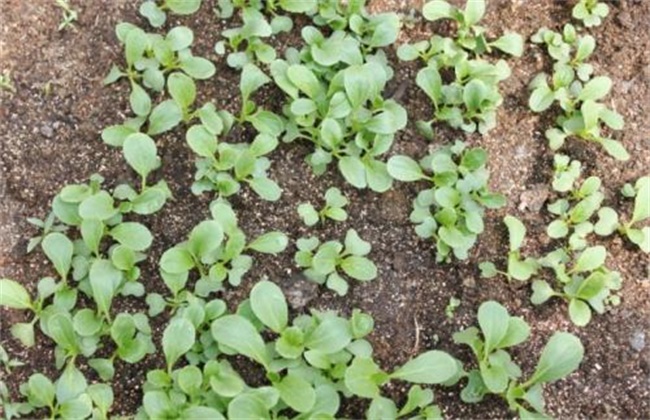
I. Causes of Yellowing in Rapeseed Seedlings
Yellowing of rapeseed seedlings is generally caused by three situations. First, the rapeseed was not plowed before sowing. Rapeseed sowing generally requires two rounds of plowing before sowing: the first is a deep plowing of large clods of soil, after which the soil is sun-dried for a week; the second plowing is done at sowing time, when the soil must be broken up fine, and sufficient base fertilizer should be applied before plowing. The second situation is that the previous crop was a broad bean field, where residual pathogenic bacteria are greater, because broad beans suffer from relatively severe diseases, and after harvest the pathogens remain in the soil, causing harm to rapeseed seedlings. The third is that no pest and disease control was carried out, leading to worsening of the disease and causing the seedlings to turn yellow.
II. Remedial Measures
1. During the seedling stage, do a good job of clearing ditches and draining water to avoid waterlogging. At the same time, be prepared to sow at the right time. Rapeseed is quite sensitive to the sowing period; germination, emergence, root growth and leaf development all require certain temperature conditions. The optimum temperature for germination is 16-22 degrees, and leaf emergence proceeds smoothly only above 10-15 degrees. For the seedbed, it is recommended to choose fertile soil and a plot close to a water source.
2. Spray foliar fertilizer on the rapeseed. It is recommended to use 0.1-0.3% monopotassium phosphate or potassium phosphite and similar agents for foliar spraying to promote the growth and development of the rapeseed seedling root system so that the yellowing recovers as soon as possible. As for topdressing, nutrients should also be supplied in a timely manner according to the growth of the rapeseed, with an appropriate increase in phosphorus and potassium fertilizer, which can greatly reduce the yellowing phenomenon.
3. Proper trimming and pinching off the tips to encourage the rapeseed to produce more branches, form a good population structure, and enhance disease resistance. This can effectively prevent the yellowing phenomenon in rapeseed and is also one of the ways to obtain a high yield.
4. Timely prevention and control of pests and diseases is also one of the main measures to prevent yellowing of rapeseed seedlings. During the growth cycle of rapeseed, the main pest and disease threats include cabbage caterpillars, flea beetles, and aphids. It is recommended to use a 3000-fold dilution of 25% deltamethrin or a 1000-fold dilution of 40% dimethoate for spray control.
The above is an introduction to the causes of yellowing in rapeseed seedlings and remedial measures. We hope it helps you. To learn more related knowledge, please stay tuned to us.