Where is black corn produced?
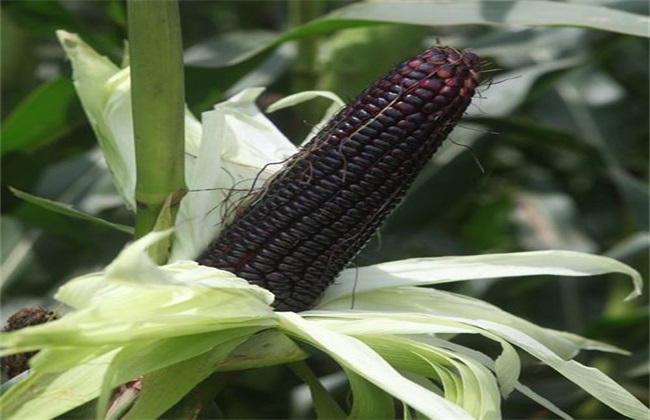
Black corn is a special kind of corn. Unlike other corn, which is yellow, black corn is entirely black, mainly because it is rich in melanin. It also contains nutrients such as plant protein, amino acids and trace elements. Overall, its nutritional content is somewhat higher than that of ordinary corn. Even the nutrient content of the corn plant itself is higher than that of ordinary corn, making it more suitable for animal feed. So black corn is not commonly seen either. Where are its main producing areas? Let us introduce them right away.
1. Main producing areas
Black corn can be grown in most regions, but at present it is only grown in Liaoning and Anhui in the north, Guangdong in the south, Sichuan in the southwest, and - in the northwest. In these areas, cultivation has already been widely promoted. In other areas, it is only grown in scattered small plots. Some areas are still in the trial stage of growing it. So the main producing areas are now these places.
2. Planting methods
For spring sowing, the whole growth period is about 4 months, and about 2500 plants are grown per mu. The soil for planting is fertile and loose soil, and the base fertilizer is about 1000 jin per mu. It must be planted with special isolation to avoid receiving pollen from ordinary corn and producing mixed kernels. The main method is spatial isolation, staying far away from other fields, or staggering the flowering period in terms of planting time. The main pests to control are corn borers and cutworms, using carbofuran for control. Buy packaged seeds; generally direct sowing is enough, and after the land is leveled, sowing can begin. After sowing, long-term management is needed.
3. Nutritional value
It is mainly very high in lysine and has high nutritional value; among trace elements, its potassium content is the highest. Eating more black corn can stabilize mood and help prevent cardiovascular and cerebrovascular diseases. It contains more iron and is suitable for people with anemia. Its zinc content is relatively high and is suitable for children to eat, helping prevent zinc deficiency, since children are very prone to zinc deficiency. It can prevent the adverse effects of zinc deficiency, such as improving resistance and improving anemia. Its main calcium and phosphorus components are suitable for children with calcium deficiency and for middle-aged and elderly people. The melanin it contains mainly helps lower cholesterol and has a health-protecting effect on the cardiovascular and cerebrovascular systems.
4. Appearance characteristics
Previously, some people thought black corn was genetically modified food, could not be used 2, and was not good to eat, but in fact black corn is just one type of corn. Or rather, one variety. It is black simply because its melanin content is relatively high. Ordinary black corn usually has glossy black kernels in appearance, but some are white near the attachment point. Some look as if they have a dark red tint.
Black corn can be grown in most places, but at present it is only widely promoted for cultivation in these few places, while some other places are also trying to grow it. In the future, the planting area will gradually expand. Total output will also increase.