What are the growing environment requirements for rehmannia?
Rehmannia is a famous medicinal herb, belonging to the genus Rehmannia in the Scrophulariaceae family. It often grows wild on hillsides at low to medium altitudes, and can sometimes be seen along roadsides. In fact, its underground roots are yellow-white, which is why it is called rehmannia (di huang, "yellow earth"). What exactly is the growing environment of the rehmannia plant like? All we know is that it can also be found by walls. So this rehmannia plant must be a plant that is particularly adaptable to its environment.
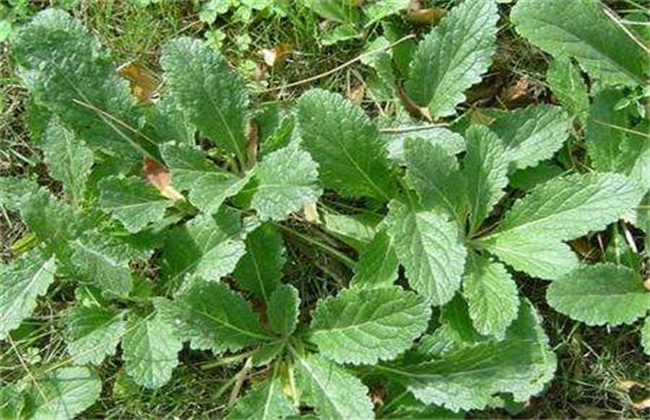
1. Environment
It is mainly distributed in the north, in Henan, Hebei, Liaoning, and Inner Mongolia, in the northwest in Shaanxi and Gansu, in the south in Jiangsu, and in the central region in Hubei. It may also exist in some other areas, but this is just a general distribution. It often grows on hillsides, and the more barren the hill, the more it grows. It can grow on roadsides and by walls on flat ground.
2. Soil
It mainly prefers to grow in fertile sandy loam soil; such soil is loose and breathable, does not hold water, and is suitable for the expansion of underground tuberous roots. Clay soil is not breathable, loess soil is barren and tends toward acidity, and paddy field soil is sticky and heavy, so none of them are suitable for planting rehmannia. Land at the foot of hills where corn and soybeans are planted is very suitable for growing rehmannia. However, land that is too dry, has no water source nearby, and turns into muddy water when watered is not suitable soil.
3. Light
It is a sun-loving plant and must receive sufficient light; during the growing period there must be no tall trees or plants blocking the sun. It is not shade-tolerant, and will not grow in large forests, woodlands, or shrub thickets; it generally grows among weeds on sunny hillsides, or in green grassy areas. Ordinary light is acceptable, and strong summer sunlight does not affect it.
4. Temperature
It needs to reach a certain temperature before it will sprout; below 10 degrees, it cannot sprout at all. It needs a temperature above 12 degrees to sprout, and emergence of seedlings requires a sustained temperature above 12 degrees for about one month. In the south, April to May is the most suitable temperature for sprouting and growth, around 20 to 28 degrees. The optimal temperature will shorten the time for sprouting and seedling emergence.
5. Nutrition
Rehmannia likes fertilizer, and during the growing period it needs multiple topdressings, but topdressing raises the soil concentration, so it must be combined with watering to help absorption. However, rehmannia has a poor root system and is afraid of both waterlogging and drought, so fertilizer and water can be applied in small amounts many times to retain fertilizer and moisture. Do not apply chemical fertilizer; use fermented livestock manure.
The native environment of rehmannia is sunny hillsides at low to medium altitudes; based on its characteristics, its planting and growing environment should be established. In this way, a suitable environment can be provided in a targeted manner. But if the environment is limited, rehmannia is actually still quite adaptable.