Detailed Explanation of the Key Technical Points of Hop Field Management
Hops are a very common wild vegetable in rural areas, and they are now grown across a very large area in our country. Hops can not only be used for brewing beer, but also have high medicinal value. So hops are still very popular now, and when we grow hops, we must pay attention to doing good management work so as to increase yields as much as possible. So today, the editor brings you the field management of hops. Let us take a look below!
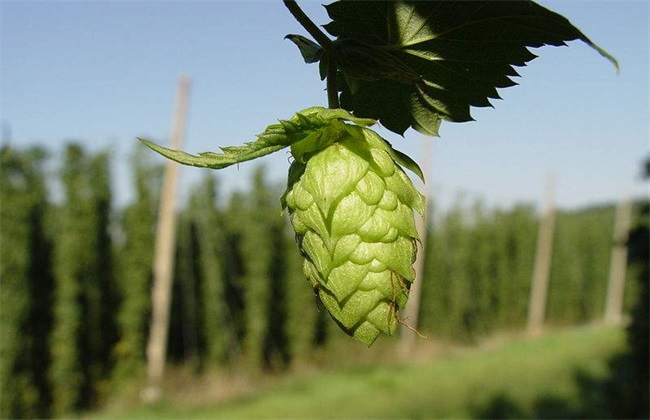
1. Thinning and final thinning of seedlings
After hop seedlings emerge, we should begin thinning work, preserving sufficient growing space for strong seedlings and removing some weak seedlings to avoid consuming too many nutrients. Then, when the seedlings grow to about 20 cm tall, final thinning can begin. When keeping seedlings, we should make reasonable adjustments according to the soil fertility, the variety itself, and the row and plant spacing. Normally, in plots with large plant spacing and high-trellis cultivation, about 3 plants can be kept per plant position, and after final thinning, management should be strengthened to ensure normal growth of the hops.
2. Leading and tying vines
When hop seedlings grow to about 50 cm tall, we should properly carry out vine tying and leading work. Fine string or plastic rope can be used to tie the hop branches and vines to the iron wires on the trellis according to their growth habits. Usually, vines are tied once about every 4 days, preferably on a sunny day when the plants show slight wilting. This avoids the branches being too hard and causing the branches and vines to break when tied. Then, when the seedlings grow to two meters tall, carry out branch and leaf thinning work. Promptly thin out overly dense, overlapping, and pest- or disease-affected branches. Improve air permeability and light penetration, promote the growth of the main vine, and reduce infection by pests and diseases.
3. Water and fertilizer management
During the hop growing period, we must do a good job of watering, especially when overwintering, if there is a lack of water. Then it will have a great impact on the growth of hops, and the yield will also decline because of it. Especially during the flowering period, we must ensure there is sufficient moisture; throughout the entire growth period, we need to water about 7 times. Then when watering, it can be combined with fertilization work; at the seedling stage, nitrogen fertilizer can be applied, about 12 kg per mu. Then at the budding stage and flowering stage, topdressing should be applied once each.
4. Cultivation and weeding
Cultivation and weeding are also very important for the growth of hops. If weeding is not timely, then weeds will seize the nutrients for hop growth. This will affect the growth of hops, and after each watering or after rain, cultivation and weeding work should be carried out once. The depth of cultivation should be reasonably adjusted according to the growth stage of the hops. For example, in the early and late stages of hop growth, deeper hoeing can be done appropriately. But during the flowering period, shallow hoeing should be the main approach, to avoid the roots being injured by going too deep and reducing the yield.
The above is a brief introduction to hop field management. Hop field management work is very important, and many details need our attention. If you want to increase the yield, then you must do a good job of management work. That is all for today's introduction. This article is for reference only, and I hope it can help everyone!