Hops Planting Techniques and Management Methods
Hops is a perennial climbing herbaceous plant in the Cannabaceae family. As the name suggests, hops is the main raw material used to make beer. In addition, the female flowers of hops have medicinal effects such as calming the nerves, promoting urination, strengthening the stomach and aiding digestion. They can be used to treat problems such as abdominal bloating and edema. It was originally a wild weed, and after its value was discovered, it is now planted everywhere in our country. So today, the editor brings you the planting techniques for hops. Let's take a look below!
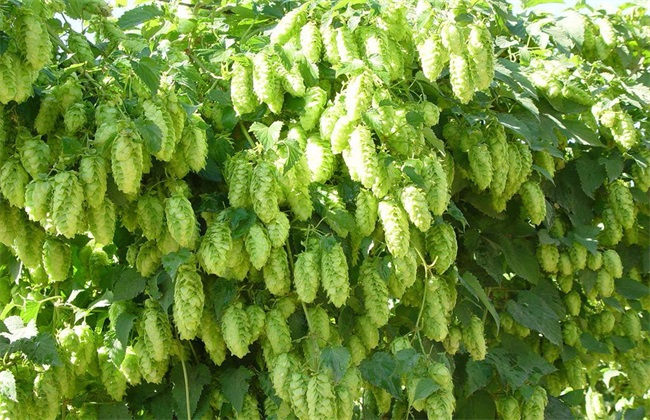
1. Site selection and land preparation
Hops was originally a wild weed and is distributed throughout our country, so its adaptability to soil is relatively strong. However, when planting hops, the yield and quality of the hops must be taken into consideration, so when planting, we should choose thick, fertile soil, ensure convenient transportation for easy transport. Then do a good job of land preparation, plowing the soil about 28 cm deep. Then dig trenches, keeping the depth and width of the trenches at about 50 cm. Then apply about 3000 kg of decomposed farmyard manure per mu. Apply it into the trenches and mix it thoroughly with the soil to improve soil fertility.
2. Building trellises
Because hops is a climbing plant, when planting hops we should also build trellises well. Trellis construction is divided into low trellises and high trellises. When building low trellises, control the spacing well, keeping the height of the frame at about 3 m. Then bury about 1 m of it in the soil, maintaining a certain slant. Then stretch thin iron wire across the top of each support post, letting the hops climb and grow freely. This trellising method has low investment and strong wind resistance, but its permeability is relatively poor, and management is relatively laborious. On the contrary, high trellises require greater investment, but the growing environment is better.
3. Timely planting
The planting time for hops is generally in early spring. Usually, when the spring temperature rises back to about 11 degrees, seedlings can be set out, mainly depending on the region. We should control the plant and row spacing well according to climate, variety and trellising. In the year of planting, the plant spacing should be controlled at about 50 cm, and the row spacing should be kept at about 2.8 m. Then in the second year, every other plant should be thinned out, and the plant spacing should be expanded to about 1 m. Before planting, the seedlings should be disinfected with Bordeaux mixture to prevent infection. When planting, place the young seedlings in the center of the trench pit, keeping the distance from the top of the seedling to the ground at about 11 cm. Then fill the pit level, cover with soil again, and water after planting.
4. Mulching with plastic film
After the young seedlings are planted, we should also do a good job of covering with plastic film. After the hops seedlings are planted, when there is no standing water in the planting trench, cover with film in time. To improve the effect of film covering, a wooden stick should be erected as a support at certain intervals along each trench. After covering with film, press down all the edges around the film with stones. Then when the seedlings in the trench grow to about 20 cm, do a good job of releasing the seedlings, and when releasing them, take care that the film openings do not leak wind. After June, when the seedlings grow to about two meters, break the film and recover the covering film.
The above is a brief introduction to hops planting techniques. Planting hops is actually very simple. As long as management work is done well, normal growth of hops can be ensured. That is all for today's introduction. This article is for reference only, and I hope it can help everyone!