What are the key technical points for field management of ice plant?
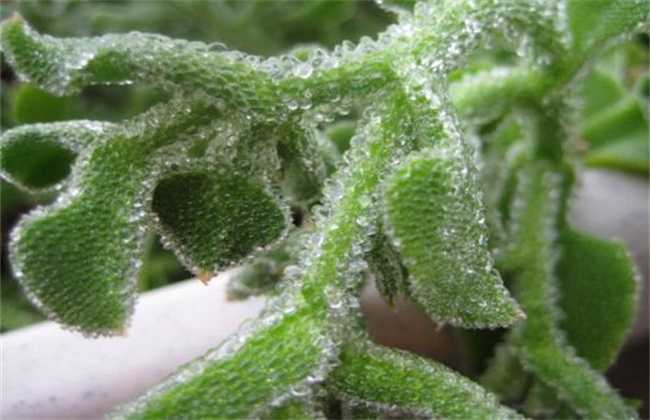
Ice plant is a recently popular specialty vegetable in China. It originated in Africa and was then introduced to China for cultivation. Ice plant has very distinctive appearance features: its flowers and leaves are quite unusual, but the colors are vivid, and small blisters resembling ice crystals bulge on the surface of the stems and leaves. It is also rich in nutritional value, and there is now some cultivation of it in China. So how should ice plant be managed during cultivation? Let's take a look together below!
1. Soil management
Suitable cultivation methods for ice plant include open field, protected facilities, and others. Basically all cultivation methods can be used to grow ice plant. During growth, ice plant absorbs heavy metals very strongly, so soil contamination must be avoided, and the soil should be regularly prepared and disinfected. If the soil is contaminated by heavy metals, then the soil should be replaced in time. Because ice plant grows better in soil with good drainage, we should also carry out regular intertillage to improve soil permeability. If drainage and irrigation capacity is too weak and causes water accumulation in the soil, then the impact on ice plant growth is very great.
2. Water and fertilizer management
After the ice plant seedlings are thinned and established, the amount of watering should be appropriately reduced. Usually no watering is needed within 10 days after transplanting. Also, after planting ice plant, water only when leaf wilting is observed. Water thoroughly each time, but do not overwater. Promoting the formation of ice crystals on the leaves can effectively increase the value of ice plant. If too much water is applied, then fewer ice crystals form, and nutrition and taste will also decline. Then, sufficient base fertilizer should be applied before planting, and topdressing should be done according to the growth of ice plant. Topdressing should mainly follow the principle of frequent applications in small amounts.
3. Light control
Light is very important for the growth of ice plant. Ice plant likes light and prefers to grow in places with sufficient light. During the growth of ice plant, while ensuring temperature, it should be exposed to as much light as possible. This will greatly help its yield and quality. In addition to light, we must also control temperature well. Ice plant can survive in an environment of -5-30°C. However, the optimum temperature for growth should be no lower than 5°C and no higher than 30°C. If it is below 5°C, although it will continue to grow, wilting may also occur. When summer temperatures are high, appropriate shading should be used for cooling. If grown in protected facilities, then ventilation should be carried out in time.
4. Pest and disease control
Ice plant has relatively strong disease resistance, so diseases occur relatively rarely. It is mainly threatened by pests, such as aphids, scarab beetles, and others. To achieve the goal of high-yield and high-quality cultivation, then the first priority is prevention. Reduce the use of pesticides and lower field contamination. Then set up insect-proof nets, sticky traps, and other measures around it for control. However, it should also be noted that during cultivation, attention must be paid to doing a good job of ventilation, cooling, and dehumidification to avoid new fungal and bacterial diseases caused by excessively high temperature and humidity.
The above is a brief introduction to the key field management points for ice plant. Field management work for ice plant is very important, especially basic work such as temperature, water, and fertilizer. Management should not be too extensive, otherwise yield reduction is likely. That is all for today's introduction. This article is for reference only, and we hope it can help everyone!