Detailed Explanation of Paris polyphylla Planting Techniques and Management Key Points
Paris polyphylla is a plant in the Liliaceae family. The part commonly used as medicinal material is the rhizome of Paris polyphylla. The common types of Paris polyphylla are Paris yunnanensis or Paris polyphylla var. chinensis (Qi Ye Yi Zhi Hua). Paris polyphylla has certain medicinal effects. Paris polyphylla cultivation is suitable in the southwestern region and has certain requirements for the growing environment, so planting management also needs to pay attention to these aspects. Now let us learn about the cultivation of Paris polyphylla.
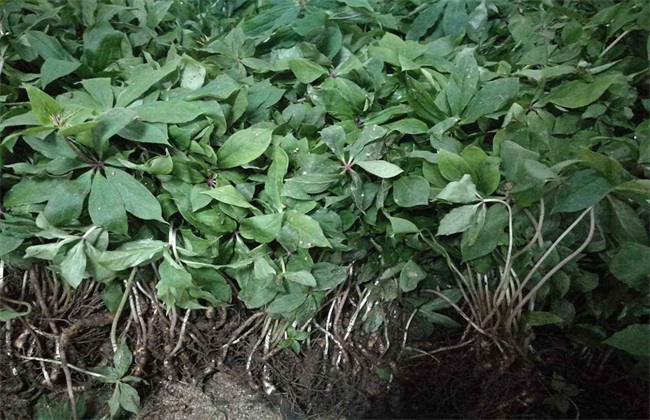
1. Seedling stage
Paris polyphylla generally needs to be raised as seedlings before transplanting. Before sowing, the seeds are stratified with river sand to promote germination, and then sown after germination. When sowing, pay attention to moisture retention, cover with moist fine soil, and maintain moisture retention from emergence until true leaves grow. Fertilizer cannot be applied because the root system is not yet well developed. After true leaves grow, water can be sprayed lightly, and appropriate fertilizer water can be applied. Once the growth height is reached, it can be transplanted. However, transplanting must be done at the right time; if too small, the roots are damaged, and if too large, the roots are also damaged.
2. Transplanting stage
When transplanting, pulling them out of the soil inevitably damages the roots, but root damage should be minimized as much as possible. They can be pulled out after watering more, or planted with some soil attached, which makes root damage less likely. Transplanting involves a seedling recovery period, a period of waiting for root growth to stabilize. At this time, watering is needed in the early stage, and topdressing should be emphasized in the later stage. Nitrogen, phosphorus, and potassium all need to be used in combination. The main purpose is to greatly promote root growth.
3. Growth stage
During the growth stage of Paris polyphylla, temperature and moisture need to be controlled. For example, soil moisture should be around 40%, and roughly the top 2 cm of the soil surface should be moist. A temperature of at least above 12 degrees is more suitable. Low temperatures tend to affect it, but low temperatures generally do not occur when Paris polyphylla is growing. Drip irrigation or sprinkler irrigation can maintain moisture continuously. As for temperature, ordinary open-field planting seasons are generally fine, from spring to autumn. During the growth stage, some farmyard manure can be applied.
4. Flowering and rhizome expansion stage
Flowering generally occurs from May to July. Flowering occurs in seasons with relatively high temperatures. At this time, note that temperatures above 35 degrees will affect it. During the flowering period, moisture can be appropriately reduced, but if the temperature is extremely high and the ground is dry, watering is needed. Fertilization should be prepared and applied before this. Both farmyard manure and nitrogen, phosphorus, and potassium fertilizers should be applied. Paris polyphylla has the characteristic of flowering while the rhizome expands, so at this time attention should be paid to nutrient supply to balance the relationship between the two growth processes.
Paris polyphylla is a perennial medicinal plant with several types and has the characteristic of flowering and rhizome expansion occurring simultaneously. Therefore, the planting technique and management work to be done during the growth period should be determined according to these characteristics. Or other aspects.