How to Prevent and Control Potato Late Blight? A Detailed Guide to Practical Methods
Potato late blight is a disease caused by the oomycete Phytophthora infestans, and this disease is quite serious for potatoes. So today I will specifically explain the origin of potato late blight, the infection process, the symptoms and signs, as well as when to prevent and control it and related information on prevention methods, to help everyone understand late blight.
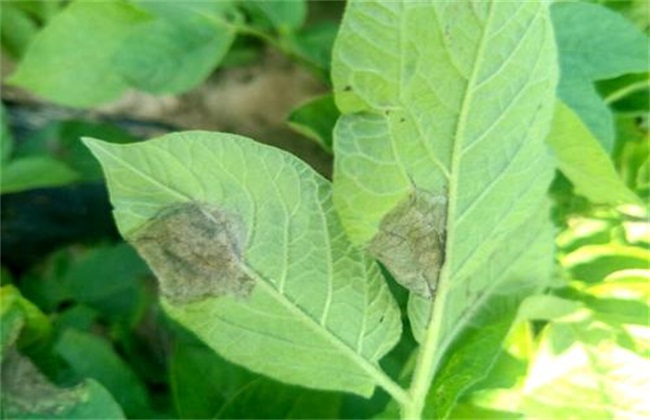
I. Disease Symptoms
When leaves are infected, water-soaked lesions appear, surrounded by green halos. After rain, the lesions expand rapidly and turn brown, and sporangia grow rapidly on the underside of the leaves, appearing as white mold-like growth. After the weather clears, the affected leaves dry up and tend to crack. When stems and leaves are infected, brown spots form and later spread to the leaves, at which point the symptoms differ, generally appearing as black rot and wilting followed by drying. When underground tubers are affected, brown spots appear first, followed by rot, sunken areas, expansion and complete decay.
II. Disease Infection
The pathogen is a type of Phytophthora infestans, which mainly produces conidia for transmission and damage. In water it can produce swimming spores, and generally the zoospores can directly penetrate the host, spreading very quickly under good transmission conditions and causing infection easily. Soil moisture, rainwater and irrigation water can all serve as transmission media. And starting from the rise in spring temperatures, growth and germination are especially rapid. Warm and humid conditions are the main triggers for disease development, and from late spring to summer is the peak period of disease occurrence.
III. Disease Triggers
Continuous rainy days in spring, high soil moisture, high summer temperatures, heavy rainfall, abundant field moisture and high water mobility. High nighttime temperatures in summer that do not drop are suitable for pathogen growth. Persistently excessive air humidity and leaves remaining wet without drying are favorable conditions for disease development. Last year's diseased plant residues and pathogens remaining in the soil can cause repeated infection. Airflow causes the disease to recur.
IV. Prevention and Control Measures
1. Prevention
Choose soil that has never been planted with potatoes for cultivation. If disease occurred in the first year, both the diseased plant residues and the soil must be treated and disinfected. Planting in mountainous areas is better than in low-lying fields, as mountainous areas have good aeration. Drainage should be convenient. Rotation with cruciferous vegetables such as rapeseed can reduce the source of inoculum. Ensure adequate nutrition to maintain optimal growth vigor and resistance to the pathogen. The field must not be too densely closed; increase planting spacing and weed at any time, especially broadleaf weeds.
2. Medication
Potato seed tubers can be soaked and disinfected with a 0.2% potassium permanganate solution. When disease occurs in the field, a 500-fold dilution of 58% metalaxyl · mancozeb can be sprayed. In fact, there are many pesticide options; generally, medications are used alternately, once a week. After several applications, it can be treated.
The prevention and control methods for potato late blight are the content above. If it is helpful to you, please continue to support us, and welcome to read our articles next time.