Detailed Explanation of Key Management Points for Greenhouse Vegetable Cultivation Techniques
A greenhouse is a warm space formed by a structure combined with greenhouse film, which can retain heat through the accumulation of carbon dioxide. When local seasonal temperatures are low, it can raise the temperature to grow vegetables that cannot be grown in that season. Off-season cultivation is one of the biggest advantages of greenhouse cultivation, but there are also some disadvantages, such as being prone to fertilizer damage and pesticide damage. Therefore, management must grasp these key points for implementation.
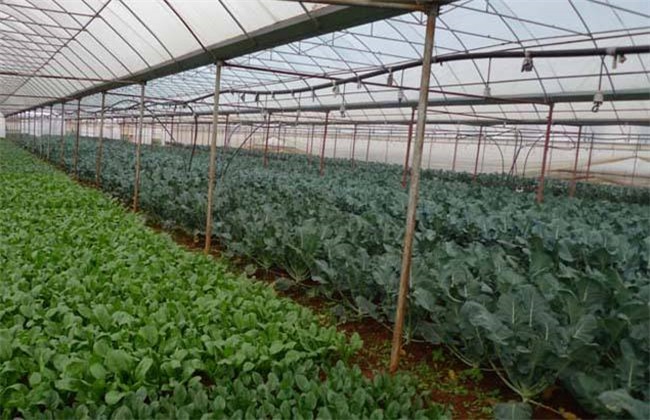
I. Cultivation Management
1. Temperature Regulation
In winter, when it is cold, insulation is essential and ventilation is seldom used, but at night the carbon dioxide concentration will rise. Do vegetables still grow best then, or do they still need sufficient oxygen? Therefore, on sunny days, the skylight must definitely be opened for ventilation. This will not lower the temperature inside the greenhouse too much. In summer, both ends of the greenhouse can be left open during the day, and closed at night when the temperature drops; if the temperature does not drop, ventilation can be maintained continuously. Internal temperature regulation must also be adjusted according to the outside temperature.
2. Humidity
Greenhouses are prone to drought, but excessive humidity in the greenhouse is harmful to vegetable growth. Therefore, do not water too much at one time, because moisture disperses relatively slowly. It is best to choose drip irrigation, and also remember to choose anti-drip greenhouse film to prevent water from dripping onto the vegetables, which can easily cause diseases, especially some rot diseases and the like. But watering cannot be omitted either, and drip irrigation is the best method.
3. Light Transmission
Greenhouse film should be selected with relatively good light transmittance. Generally, vegetables all need sufficient sunlight, but sometimes some vegetables can undergo blanching cultivation, such as yellow chives. This means that after the vegetables have grown for a period of time, they are then subjected to dark treatment, which can make the vegetables softer in texture and better in taste.
II. Precautions
1. Fertilizer Damage
With long-term drip irrigation in greenhouses, without rain exposure and without flowing water irrigation, after a long period of cultivation, fertilizers that have not been fully consumed accumulate in the soil, which can easily raise the soil concentration, affect root absorption, prevent the absorption of nutrients and water, and also damage the roots. The final solution is to change the plot for planting. Rotational planting.
2. Pesticide Damage
Due to limited space, an effective pesticide method is fumigation and the like, but this can easily cause pesticide damage, and pesticide residues in the soil are harmful to vegetable growth. Therefore, it is best to pay attention to pest and disease prevention, and use highly toxic pesticides less. Choose protective agents and spray as much as possible.
Greenhouse cultivation has advantages and limitations, but as long as the advantages outweigh the disadvantages, it can continue to be used. Moreover, greenhouse production technology will also become more optimized. Relatively speaking, the main management of greenhouse vegetable production is somewhat simpler than that of open-field cultivation.