Detailed Explanation of Key Points of New Celery Planting Techniques in Summer
Celery is a side-dish vegetable that many people love very much. It is distributed throughout all regions of our country, and its market demand is very large. Moreover, celery has relatively strong adaptability and can be planted all year round. However, when planting in summer, because of the high temperatures, some aspects are still different from other seasons. So today, the editor brings you the celery planting techniques for summer. Let's take a look below!
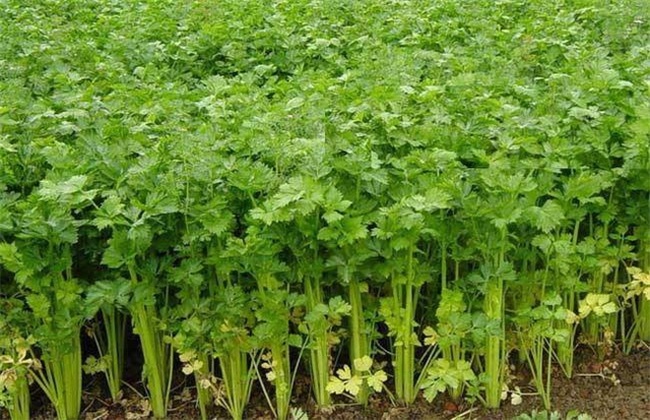
1. Seed treatment
If celery seeds are sown without treatment, it is very difficult for them to germinate. Because celery seeds have a relatively long dormancy period, the seed dormancy must be broken before sowing. First, sun-dry the seeds for about 3 hours, then soak the seeds in water for about 11 hours, and then wash off the mucus on the seeds. After washing them clean, air-dry the seeds until half-dry, then wrap the seeds in a wet cloth, place them in an environment of about 5 degrees for cold storage, controlling the time to about 12 hours, then take them out and place them in a cool place. Repeat about 3 times.
2. Transplanting seedlings and setting them in place
After the seeds have been treated, pay attention to controlling the temperature when sowing. The temperature should be maintained at about 18 degrees, and germination can occur in about 1-3 weeks. If the temperature exceeds 25 degrees, then seed germination will become very difficult, or even impossible. When the seedlings have grown about 5 true leaves, transplanting can begin. When setting them in place, plant them separately according to the size of the seedlings. When digging out the seedlings, be careful not to damage the inner part of the seedlings, and mainly transplant them with soil. Then note that this should be done after 5 p.m. to prevent the temperature from being too high. After setting them in place, water them thoroughly to settle the roots.
3. Building a shed for shade
After the seedlings are set in place, do the shed-building work well, with the shed height at about 2.2 m. Then cover the shed with a layer of shade netting, ensuring that the sun cannot reach the celery from 10 a.m. to 3 p.m. every day. When planting in summer, shade work must be done well throughout the entire growth period of the celery. The shade netting can mainly be black, which can lower the surface temperature, improve the field climate, and is very beneficial to the production and photosynthesis of celery. In addition, the shed can also protect against heavy rain and resist strong winds, reducing mechanical damage to celery and improving planting benefits.
4. Fertilizer and water management
After the celery seedlings are set in place and survive, until the plants close the rows, shallow cultivation should be done about 3 times, and each shallow cultivation is best carried out together with topdressing. The fertilizers are mainly compound fertilizer and dry manure residue. Usually, each fertilization should be followed by one watering. If it rains, then there is no need to water. During the first two topdressings, the topdressing amount should be kept at about 1/5 of the total fertilizer amount. For the latter two, keep it at about 70%. Finally, before the plants close the rows, apply one more quick-acting fertilizer. The topdressing amount per mu should be controlled at about 2500 kg. Finally, in the middle and late stages, foliar fertilizer should also be sprayed appropriately to promote the elongation of celery petioles.
The above is a brief introduction to the new techniques for planting celery in summer. In summer, because the temperature is very high, it will have a relatively large impact on the growth of celery, so everyone must pay a lot of attention when planting. That is all for today's introduction. This article is for reference only, and I hope it can help everyone!