How to cultivate Camellia oleifera for high yield? Master these key points
Camellia oleifera is a common economic tree in China, and its fruit can be used to press oil. There are many production areas for Camellia oleifera in China, and the cultivation area is relatively large. Scientific cultivation techniques and management work are directly related to the yield of Camellia oleifera. Below, the editor will introduce in detail the key points of high-yield cultivation techniques for Camellia oleifera. Let's learn about them together.
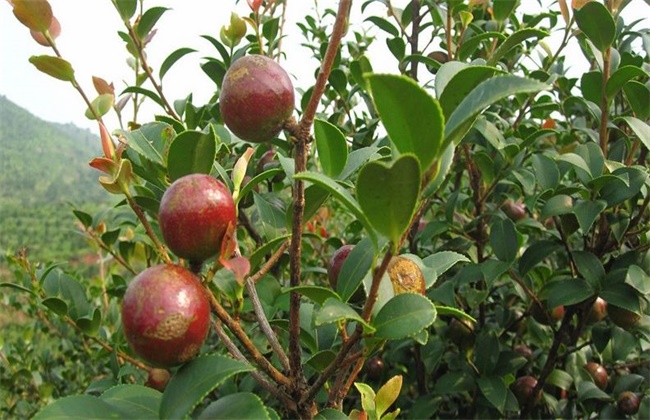
1. Select improved varieties and strong seedlings
The quality of the seedlings is related to the tree's fertilization and high yield. When selecting improved varieties, several points should be noted. First, regional adaptability: climate and site conditions differ from place to place, so excellent strains adapted to the ecological conditions of the area should be selected. Second, multi-line combination: Camellia oleifera has the highest pollination and fertilization rate and the best quality in cross-pollination between different plants. Third, consistent flowering period: the selected Camellia oleifera should have basically consistent flowering period and young fruit period, so as to achieve a higher effective rate. Fourth, choose container cup seedlings with a height of 10 cm, one-year superior family seedlings with a height of 20 cm, two-year-old grafted seedlings with a height of 25 cm, stem diameter thickness of 0.4 cm, complete root system, and no pests or diseases.
2. Scientific land preparation
Land preparation can effectively improve the soil, make the soil mature and loose, improve the soil's water storage capacity and aeration, accelerate the decomposition of organic matter in the soil, improve the conditions for microbial activity, and increase soil fertility. The quality of land preparation directly affects the survival rate of Camellia oleifera afforestation and the growth of the trees. Especially on mountain land with relatively shallow soil layers, land preparation can accelerate rock weathering and soil maturation, increase the depth of the plow layer, help conserve water, and increase organic matter. Land preparation should be carried out one year or half a year before afforestation. It is best to open up wasteland and turn the soil in the summer or autumn of the previous year. Land preparation and afforestation should not be done at the same time.
3. Scientific planting
Whether Camellia oleifera can survive after planting is closely related to the planting season. According to local climatic conditions, planting should be carried out when the aboveground part of the seedlings stops growing or during the rainy period. Generally, planting and afforestation from mid-October to November or from February to March gives better results. For afforestation, the planting density should be arranged reasonably, generally 100-150 plants per mu, determined according to the terrain, to ensure good permeability.
4. Scientific management
After planting, if missing plants and diseased plants are found, replant them with strong seedlings of the same age, and strengthen management so that the replanted seedlings and the young seedlings in the forest land grow in a balanced way. When young trees grow to 50-80 cm, prune them back in time to promote the sprouting of new branches and cultivate the tree crown, laying a good basic tree shape for high and stable yield. No fertilizer is needed in the year of planting. During the young tree stage, nitrogen fertilizer should be the main fertilizer, with an appropriate amount of phosphorus and potassium fertilizer, applied in an appropriate amount from small to large, increasing year by year. Young trees have weak cold resistance, and they produce a large amount of new shoots with tender tissues, making them susceptible to freezing damage. Therefore, when planning forest land, avoid building orchards in low-lying depressions. In winter, windbreak belts should be appropriately established, and in November, sufficient warming fertilizer for overwintering should be applied. During the growth process, timely intertillage and weeding should be carried out, and the tree crown should be sprayed regularly for protection, effectively preventing and controlling pests and diseases, enhancing the plant's disease resistance, and enabling healthy and robust growth.
The above is an introduction to the key points of high-yield cultivation of Camellia oleifera. I hope it can help you. If you want to learn more related knowledge, please stay tuned to us.