Detailed Explanation of Key Techniques for Controlling Sclerotinia Rot in Celtuce
Celtuce, also called lettuce, is a popular market crop with a high demand for fertilizer. Many farmers grow it, but during cultivation it is affected by various pests and diseases, among which sclerotinia rot is one of the more serious ones. Once infected with this disease, the yield and quality of lettuce are severely reduced, and in severe cases it can cause total crop failure. So how should lettuce sclerotinia rot be controlled? Let's take a look.
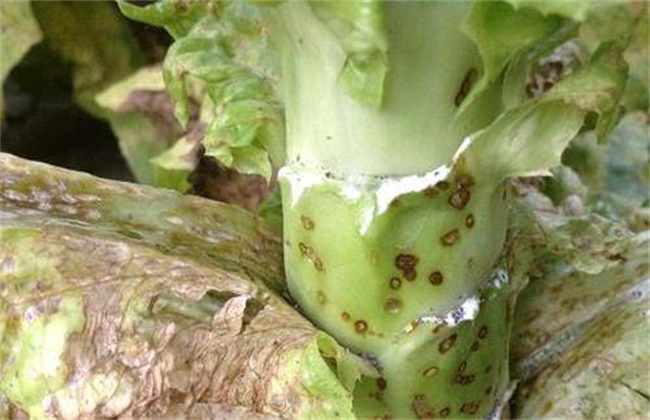
1. Disease Symptoms
In the early stage of the disease, the base of the plant stem is affected first. The lesions are initially brown and water-soaked, then gradually expand to the entire stem, causing the stem base to become soft and rotten. The affected parts of the disease are also densely covered with cotton-like white mycelium, and later sclerotia are produced. Sometimes the stem base also shows cracking symptoms. The sclerotia are initially white, then gradually become mouse-dropping-like black granular bodies. The rot caused by sclerotinia rot usually has no foul odor, which distinguishes it from bacterial soft rot. After celtuce is infected, the lower leaves of the plant become soft and brown, and the disease develops upward. The upper leaves wilt in a green wilt state. When the stem is affected, the plant grows poorly, and in severe cases the whole plant dies or lodges.
2. Disease Occurrence Pattern
The occurrence of celtuce sclerotinia rot is greatly related to climate and field management level. The pathogen can spread through airflow, rainwater and farming operations. Sclerotinia rot prefers warm and humid environments. At a temperature of around 20 degrees and humidity above 80%, the disease is favored to occur. When the temperature is higher than 35 degrees, the disease is less likely to occur. In low-lying plots prone to water accumulation, field humidity is high and the incidence is also relatively high. When planting is too dense, and when old leaves at the base, diseased leaves and weeds are not removed in the middle and late growth stages, the disease is also favored to occur.
3. Control Methods
Diseased fields should be rotated with gramineous crops, or during summer high-temperature fallow, flooding irrigation can be used to soak the field, and greenhouses can be subjected to high-temperature shed sealing, which can reduce field pathogens. Strengthen field drainage, plant at a reasonable density, pay attention to ditching and drainage, remove diseased leaves and diseased plants in time, increase air permeability, and reduce field humidity. Seeds can be rinsed with salt water or ammonium sulfate aqueous solution, then soaked in 55-degree warm water for 15 minutes for disinfection. In the middle and late growth stages, the disease is very likely to occur. Chemicals can be sprayed on the stem base, old leaves and the ground, and sprayed again after 7 days, giving good control, but attention should be paid to rotating pesticides and to the pesticide safety interval.
The above is an introduction to the control techniques for celtuce sclerotinia rot. We hope it can help you. To learn more related knowledge, please follow us.