Growing Methods and Management Tips for Panax notoginseng Greens
Panax notoginseng greens are a common cold-dressed dish. They are rich in nutrients and also have the effect of clearing heat and reducing internal heat, making them suitable for women. Many people know how to prepare them, but do you know how to grow them? Let's learn about it together below.
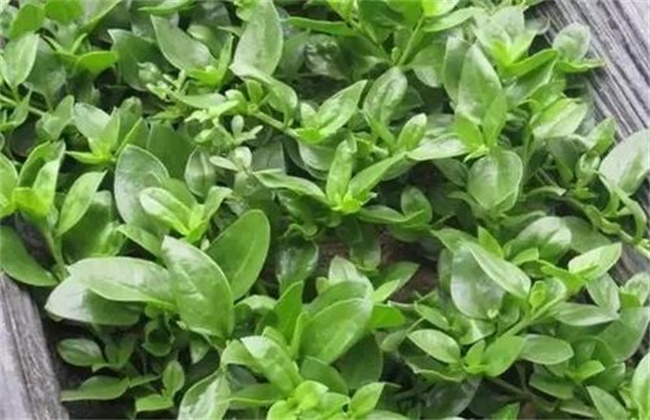
1. Land preparation and seedling raising
For the seedling bed, choose a south-facing slope that is not blocked from the wind, preferably sandy soil or calcium-rich light clay rich in humus, with loose soil and good drainage. Prepare the land finely, plowing to a depth of more than 20 cm, then form beds, requiring a bed height of 23-27 cm and a width of 1.2-1.3 m. Sowing by dibbling is advisable, with a seed spacing of 2 cm×4 cm. After sowing, cover with a layer of thin soft grass or loose cattle pen manure, and wait for emergence.
2. Transplanting seedlings for planting
Panax notoginseng seedlings can be transplanted and established after one year. Cover the seedling bed with a 2 m high canopy, and cover the top and surroundings with a layer of grass, with 50% light transmittance. The transplanting time should preferably be during the period from "Major Snow" to "Winter Solstice". Lift the seedlings and plant them the same day, controlling the plant and row spacing at 18 cm×15 cm or 21 cm×18 cm. In high-temperature areas, do not plant too densely, so as to avoid severe pests and diseases. Before planting, apply sufficient base fertilizer, mainly decomposed farmyard manure; for chemical fertilizer, mainly phosphate fertilizer. Do not apply too much nitrogen fertilizer, so as to avoid causing the seedling roots to rot.
3. Field management
Adjust the canopy according to the growth condition of Panax notoginseng and the climate. If the canopy is too thick, damping-off is likely to occur. Weed frequently. When fertilizing, follow the principle of many times and small amounts, mainly with plant ash and cow dung. Strengthen the prevention and control of pests and diseases, focusing on prevention. Apply 40-50 kg of plant ash mixed with 5 kg of lime powder per mu each time, once every 4 days. After 3 applications, spray 1:300 Bordeaux mixture, once every 7 days. This is very effective for preventing and controlling damping-off, anthracnose, and root rot. If aphid damage is found, spray with 1000-fold dimethoate solution for control.
4. Harvesting and processing
Generally, harvesting can be done after 3-4 years, and the quality is best when harvested after 5-7 years. Each year in October-November, after the seeds mature, Panax notoginseng can be dug up. Cut off the small lateral roots and fibrous roots, dry for 2-3 days, then rub with a wooden board while drying until firm. If there is rain, it can be roasted over a low fire with plant ash. The fire should not be too strong, otherwise it will cause hollowing; a fire temperature of 40°C is suitable. Roast while rubbing to make the surface smooth, and rub until it cannot be bitten through by teeth.
The above is an introduction to the growing methods for Panax notoginseng greens. We hope it can help you. To learn more related knowledge, please keep following us.