What are the control methods for black root of Chinese chives?
Chinese chives (Allium tuberosum) are a common sight in our daily markets, with a unique flavor that many people love, but many growers find black roots appearing on their Chinese chives during cultivation. If black roots are not controlled in time, they can have a huge impact on the growth and yield of Chinese chives, so what symptoms does black root of Chinese chives show? And how should it be controlled? Let's find out together.
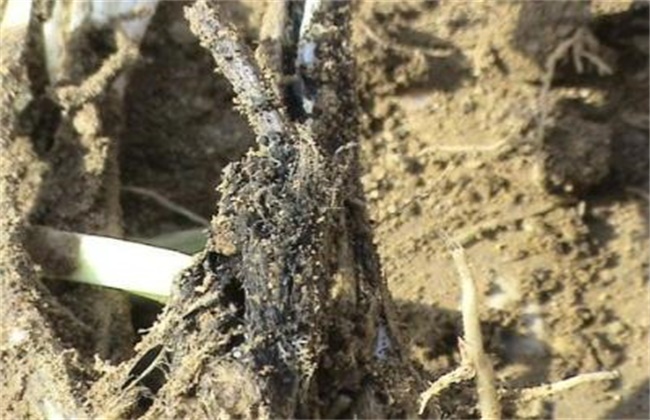
1. Disease symptoms
Black root of Chinese chives mainly affects the leaf sheaths of Chinese chives and the leaf tips of yellow chives; the affected parts first show brown or light brown rot, after which cottony mycelium can be seen winding around or clumping together. In the mid to late stages, yellowish-brown or dark brown, rapeseed-like small sclerotia form between the outer leaf sheaths and the new leaves, and in severe cases cylindrical black sclerotial crusts form on the roots of the Chinese chives.
2. Disease pattern
Black root of Chinese chives occurs mainly from late March to early May, entering its peak period in mid to late April; it is generally more severe in fields that are low-lying, have been continuously cropped for many years, have heavy clay soil, accumulate water in the field, receive excessive nitrogen fertilizer, or are planted too densely. In addition, high field humidity can also trigger this disease, causing the root system to turn black and rot, with great harm.
3. Control methods
Physical control: clean up the field, rotate crops, and after harvest gather and destroy diseased plant residues to strictly prevent the spread of the pathogen; carry out reasonable crop rotation, and do not cover the soil too deeply in winter. Strengthen cultivation management, plant at a reasonable density, improve air circulation between plants, balance fertilization, avoid excessive nitrogen fertilizer, and follow the principle of frequent light watering rather than flood irrigation, and pay attention to drainage after rain.
Chemical control: when diseased plants are found in the field, promptly remove them and take them out of the field for destruction, then carry out chemical control. Commonly used chemicals include dimethachlon, vinclozolin, procymidone, iprodione, benomyl, carbendazim, thiophanate-methyl and others, applied by spraying or root drenching, once every 7-10 days, for 3-4 consecutive times, with good results.
The above is an introduction to the control methods for black root of Chinese chives; we hope it helps you. To learn more related knowledge, please stay tuned to us.