Techniques for Controlling Excessive Vigorous Growth in Eggplant: Master These Key Technical Points
Eggplant grows vigorously and has a relatively well-developed root system. Many growers worry that excessive vegetative growth in eggplant will lead to overly long internode elongation and oversized leaves, affecting flowering and fruiting later on. Excessive vigorous growth in eggplant is also a common and widespread phenomenon during cultivation, so how should eggplant be controlled from growing too vigorously? Let's find out together.
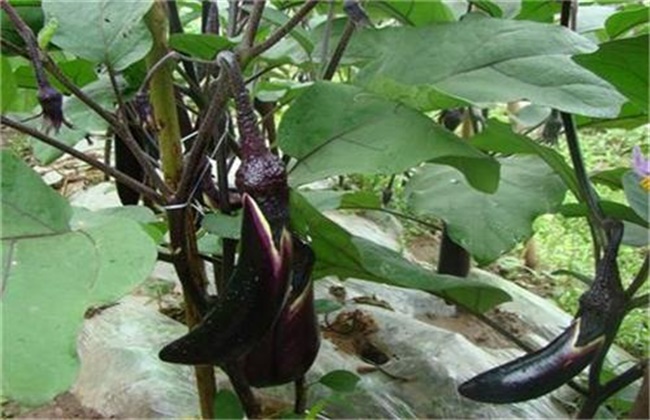
1. Temperature control
During the fruiting period, the optimal daytime temperature for eggplant growth is 25-28°C, and the nighttime temperature is 15-18°C. For plants growing too vigorously, the temperature should be appropriately controlled lower, so on clear days it is best to ventilate to let air through, keeping the greenhouse temperature no lower than 28°C. Controlling the nighttime temperature is also key to suppressing excessive vigorous growth in eggplant, especially the temperature in the latter half of the night. Generally, the temperature in the first half of the night should be controlled at around 18-20°C to facilitate the transport of photosynthetic products from the leaves, but the temperature in the latter half of the night must be low to inhibit plant respiration, with an air temperature of around 13°C when the straw mat is uncovered being appropriate.
2. Water control
For warm water[1] showing excessive vigorous growth, flood irrigation is taboo; instead, water should be applied in alternate rows, watering only between the planting rows, generally applying half a furrow of water at a time. When controlling excessive growth in eggplant, water should not be controlled excessively, as excessive water control can cause several drawbacks. First, it causes poor flower bud differentiation, forming short styles and increasing the number of malformed fruits; second, it causes poor plant growth and development, with strong vigor, larger yellow leaves, and a great susceptibility to premature senescence; third, during the period of vigorous plant growth, the demand for fertilizer and water is relatively high, and if water supply is long-term[2], root absorption of water and nutrients is insufficient, leading to slow fruit growth, easy formation of stiff fruits, and lower yield.
3. Plants growing vigorously should retain more fruits
For plants growing vigorously, as many fruits as possible should be retained to regulate the balance between vegetative growth and reproductive growth, and the first fruit (the "gate fruit") should not be removed early; it should be removed only after the opposite fruit[3] has grown to the size of an egg and the third-layer fruits have been treated with flower-setting agents.
4. Chemical growth regulation
There are many plant growth regulators for controlling excessive vigorous growth in plants, such as chlormequat, mepiquat chloride, paclobutrazol, and others. However, when using them, because the application concentrations of chlormequat and paclobutrazol are difficult to master, once the concentration is too high, it will lead to extremely low yield. Therefore, it is recommended to use mepiquat chloride or a higher concentration of 2.85% sodium nitrophenolate naphthaleneacetate aqueous solution for regulation. Generally, the application concentration of mepiquat chloride is a 750-fold dilution, and the concentration of 2.85% sodium nitrophenolate naphthaleneacetate aqueous solution is a 3000-fold dilution.
The above is an introduction to the techniques for controlling excessive vigorous growth in eggplant. We hope it can help you. If you want to learn more related knowledge, please stay tuned to us.