What are the new potato storage techniques? Learn these methods to store them longer
The potato is the potato we commonly eat in our daily lives. The number of potatoes consumed in our country every year is very large, so the area now planted with potatoes is still very large. However, sometimes when the potato yield is too high, they cannot all be sold at once, and at this time storage work needs to be done well. So how should potatoes be stored? Below, the editor brings you the new potato storage techniques. Let's take a look!
1. Storage characteristics
After the potato is harvested, it will enter a dormant period. The dormant period is about 3 months, mainly determined by differences among varieties. After the potato enters the dormant period, the respiration capacity of the tubers weakens, and nutrient consumption is not much either. Therefore, the environment will not have too great an effect on the potato. Even if the surrounding environment is favorable for sprouting, the tubers during the dormant period will not sprout; usually they only begin to sprout after passing through the dormant period. Under long-term light exposure, potatoes will cause the tubers to change color and produce a toxic substance. Therefore, when storing potatoes, they should not be exposed to light.
2. Storage environment
The suitable storage temperature for potatoes is around 4°C. When storing potatoes, be sure to control the temperature well; the temperature should not be too high or too low. If it is too high, it easily causes potatoes to sprout and lose their edible value. If it is too low, the starch in the potatoes will begin to convert into sugar. If the potatoes are to be used to make potato chips or French fries, then the temperature should be controlled at around 12°C. Then the humidity should be kept at around 82%. Humidity control is also very important. If the humidity is too high, the potatoes are extremely prone to rot. If it is too low, they easily lose water and losses increase.
3. Storage methods
Trench storage
After the potatoes are harvested, place them in a ventilated and cool room and pre-store them for about half a month first. The stacking height must not exceed 50 cm, and ventilation and light avoidance should be done well. If trench storage is used, then the time should be around October each year. First dig a trench about 1 m deep, with the width controlled at about 1.2 m, and the length determined according to the storage quantity. When the potato tubers have been piled to about 20 cm from the ground, cover the potato tubers with soil, and keep the soil cover thickness at about 80 cm. Do the covering in batches as the temperature changes. The potato tubers should not be piled too high, otherwise the temperature in the middle rises and they easily rot.
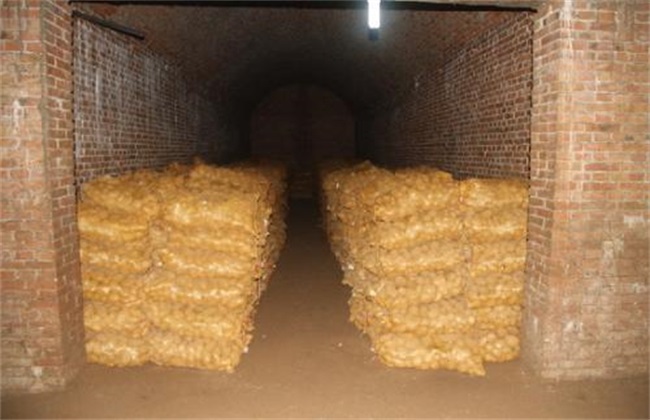
Cellar storage
Potatoes can also be stored in cellars. For cellar storage, the storage quantity must be controlled well, with the storage quantity in each cellar controlled at around 3200 kg. Because cellar ventilation can only use vents to regulate the temperature, its heat preservation capacity is relatively strong. However, in the early stage of being put into the cellar, its temperature is not easy to lower. Therefore, note that it must not be stored too full. Also note to do a good job of opening and closing the cellar entrance, and in winter note to lay in straw curtains.
The above is a brief introduction to the new potato storage techniques. Potato storage techniques are relatively simple, but note to prevent rot from occurring. That is all for today's introduction. This article is for reference only, and I hope it can help everyone!