When to water sesame? Detailed explanation of watering time and methods
In daily life, sesame is a common food. It can not only be eaten after being roasted, but also be pressed to extract edible oil. Regular consumption is very helpful to human health. Many people only know that sesame can be eaten, but they do not know that watering is a major difficulty when growing sesame. So when is the right time to water, and how should it be done? Let's learn about it together.
1. Suitable moisture content during the sesame growth period
Sesame has different water requirements at each growth stage. From sowing to emergence, the soil moisture content suitable for emergence is between 15%-25%, and emergence is fastest and the emergence rate is highest at 17%-23%. When the soil moisture content drops below 14%, the emergence rate will decline as the soil moisture content decreases, and the emergence speed will also slow down accordingly. When the soil moisture content drops below 8%, sesame cannot germinate and emerge. When the soil moisture content is higher than 23%, the emergence rate and emergence speed will also show a downward trend. From emergence to maturity, sesame has a relatively high water requirement: 60%-75% from seedling to early flowering; 75%-85% from early flowering to topping; and 65%-75% from topping to maturity. When the soil moisture content is lower than 50%, sesame will suffer displacement due to drought, and when the moisture content is higher than 90%, it is unfavorable to its growth and is also very likely to cause waterlogging damage and dead seedlings.
2. Watering time
During the sesame growth period, when the soil moisture content approaches 50% of the maximum water-holding capacity, or when the moisture content of light soil is below 13%, medium loam soil is below 15%, and clay loam soil is below 16%, sesame will show wilting. Under summer drought or autumn drought conditions, around 10 a.m. the upper leaves of sesame can be seen wilting, and after the high temperature at noon they will gradually recover. When this phenomenon occurs, irrigation should be carried out immediately. Irrigation should also take weather conditions into account, avoiding irrigation before rain or during strong winds as much as possible. The most suitable watering times are before 10 a.m. and after 4 p.m. on sunny days.
3. Watering methods
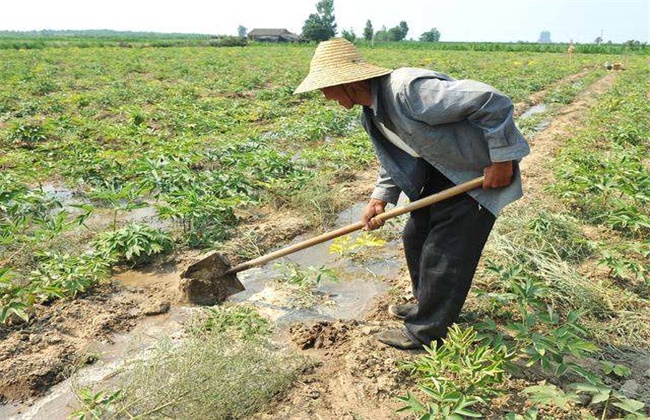
There are three watering methods for sesame: furrow irrigation, border irrigation and sprinkler irrigation. Furrow irrigation uses water led between the rows, with a small, gentle flow, so that water seeps into the soil from the furrow, reducing the contact area between the water flow and the ground, preventing ground erosion and reducing soil compaction. Border irrigation is done by building ridges in advance to form borders, so that water flows along the border surface down the slope and gradually moistens the soil. Border irrigation requires controlling the water volume to avoid water accumulation and root rot. Sprinkler irrigation is an advanced irrigation technique. It uses sprinkler irrigation equipment to spray pressurized water into the air and break it into droplets to irrigate crops. It has advantages such as economical water use, preventing soil compaction, strong adaptability to terrain, and easy control of water volume.
The above is an introduction to sesame watering time and methods. We hope it can help you. To learn more related knowledge, please keep following us.