Causes of Cucumber Wilting and Detailed Explanation of Prevention and Control Methods
Cucumber is one of the common vegetables in daily life, and during greenhouse cultivation, plants often exhibit wilting, with the entire plant's leaves suddenly wilting within a short time, the plant gradually losing its ability to bear cucumbers, and in severe cases causing plant death. Moreover, the wilting phenomenon worsens year by year, seriously affecting the yield and quality of cucumbers. So what causes cucumber wilting? How should it be prevented and controlled? Let's learn about it together.
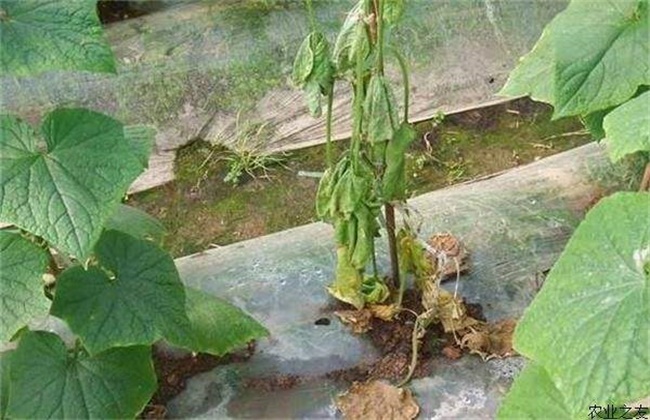
1. Acute wilting
The plant grows normally, but at noon on a sunny day the leaves suddenly wilt, recovering in the evening, and when the stem base is cut, no discoloration of the vascular tissue is found, nor is there any milky fluid flowing out. The main reason is that after consecutive cloudy days without removing the straw mat covering, the plant cannot carry out photosynthesis and root activity is weak; once a sunny day comes, the greenhouse temperature rises, air humidity decreases, leaf transpiration is fast, and root water absorption is weak, so the leaves exhibit wilting.
Prevention and control methods: During consecutive cloudy days, if a sunny day comes, by no means should all the straw mat covering be removed at once; it is best to remove part of it first, and then gradually remove it all later. When leaf wilting is severe, a sprayer can also be used to spray water on the leaves to prevent excessive wilting from damaging the leaves.
2. Flood irrigation
After irrigation, the soil's water content is relatively high and its permeability is poor; in an oxygen-deficient environment, toxic substances are produced in the soil, causing the root system to be poisoned or to suffocate from lack of oxygen and wilt.
Prevention and control methods: Water thoroughly 15-20 days before cucumber planting. If the soil layer is too deep, level the bed surface after watering so that the soil meets the standards of being deep, thorough, fine, level, and firm. Drip irrigation is preferable for watering, and flood irrigation should be avoided; be sure to remember not to use flood irrigation. After rain, cultivate and loosen the soil in time to increase permeability.
3. Root-knot nematodes
Root-knot nematodes are generally distributed within the 3-9 cm soil layer. Affected roots form root galls, which gradually swell. After the root tissue is damaged, the absorption and transport of fertilizer and water are hindered, causing the plant to be stunted, the leaves to turn yellow, and in severe cases to wilt and die.
Prevention and control methods: Prevention and control of root-knot nematodes should be carried out before planting, using chemicals to disinfect and sterilize the soil. When disease occurs, carbendazim and chlorothalonil solutions can be used for root drenching control, with good results.
4. Excessive fertilizer concentration
Applying too much fertilizer, especially when chemical fertilizer is applied near the cucumber root crown, can easily burn the plant. Applying nitrogen-containing fertilizer will decompose in the greenhouse and produce ammonia gas. When the temperature rises, excessive ammonia gas concentration can lead to wilting and plant death.
Prevention and control methods: During cultivation, attention should be paid to applying less quick-acting chemical fertilizer and more decomposed organic fertilizer. At the same time, foliar feeding and spraying leaf fertilizer can also provide the nutrients needed for plant growth.
The above is an introduction to the causes of cucumber wilting and prevention and control methods. We hope it can help you. To learn more related knowledge, please follow us.