How to grow sword beans for high yield? Detailed explanation of key planting techniques
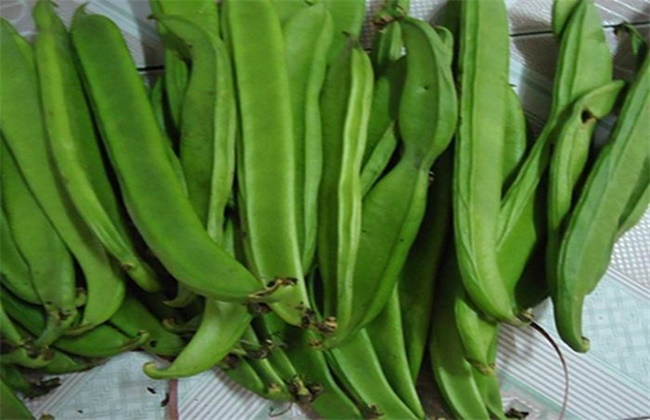
The sword bean is a great vegetable for pickling in jars. Every year when sword beans ripen, my family buys a big bunch of sword beans and yardlong beans together to make pickled tea or dry them and pickle them in jars. The taste is refreshing and appetizing. So how do you grow sword beans to get a high yield? Let's find out together with the editor.
1. Land selection and fertilization
Sword beans like a warm environment and are not cold-tolerant. They are not strict about soil requirements and can grow and develop normally in soil with a pH value between 5.0-7.5. However, to increase their yield, it is best to choose well-drained sandy loam soil. Sword beans have a long growth period, around 240 days, and have a high demand for fertilizer. You need to apply 40 kg of compound fertilizer, 40 kg of superphosphate, and 20 kg of potassium sulfate per mu as base fertilizer. Mix them evenly with the soil, then shape and rake it level, and wait until sowing.
2. Sowing and seedling raising
Sword bean seed coats are hard and absorb water slowly. Before sowing, you can soak them in warm water at 30 degrees for 15 hours to allow sufficient water absorption and help with emergence. If raising seedlings in nutrient pots, they are generally transplanted when they have 2 true leaves, with about 1200-1500 plants per mu; if direct sowing, you can sow in late March. It also needs seed soaking treatment before sowing. You can open holes in the seedbed surface and sow, with 1-2 seeds per hole, then cover with soil and mulch after sowing.
3. Fertilizer and water management
Sword beans have a high fertilizer demand, so fertilization should begin after emergence, but the concentration should be watched during the seedling stage. Generally, apply 2-3 times of dilute fertilizer water as a seedling-promoting fertilizer; the flowering and fruiting stage is the period of greatest fertilizer demand. You can combine root fertilization and foliar fertilization, spraying 2-3 times with potassium dihydrogen phosphate. After pod setting, when the pods grow to about 10 cm, apply 20-40 kg of compound fertilizer in the rows. This fertilization is relatively important and is closely related to yield.
4. Field management
Sword beans have a high pod-setting rate. To prevent the plants from lodging, before flowering and pod setting, weed, fertilize, and earth up the soil. At the same time, set up 1-meter-high supports beside the main stem to secure the main stem. When the plant is 70 cm tall, remove the growing tip, remove the stems on the opposite side of the pod-setting furrow, promptly thin out and prune old and diseased leaves on the lower part of the plant, and cut off side branches with no flowers or few flowers, so as to improve ventilation and light conditions and increase the pod-setting rate.
The above is an introduction to high-yield planting techniques for sword beans. I hope it can help you. If you want to learn more related knowledge, please keep following us.