What are the causes of continuous cropping obstacles in scallions and how can they be prevented and controlled?
Friends who grow vegetables all know that a piece of land cannot be continuously cropped with the same crop for a long time, otherwise continuous cropping damage will occur, and the scallions common in our daily lives are no exception. Continuous cropping of scallions, in mild cases, leads to insufficient plant growth affecting yield, and in severe cases, large areas of plant loss or even near-total crop failure. So what causes continuous cropping obstacles in scallions? How should they be prevented and controlled? Let's learn about it together.
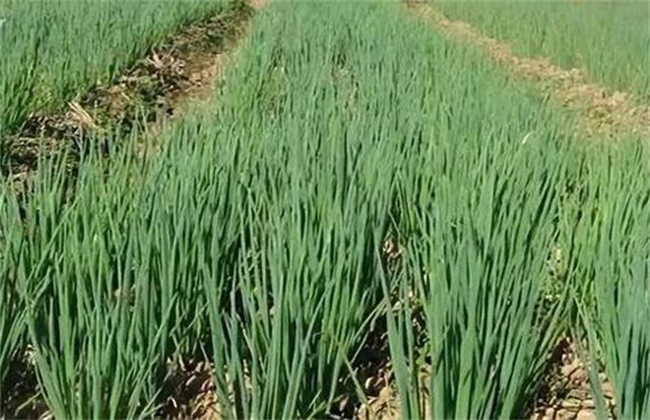
I. Causes of continuous cropping obstacles in scallions
1. Soil acidification
Scallions have high yields, reaching 6000-10000 kg per mu (667 sq m), and such large yields also remove base elements from the soil, such as calcium, magnesium, potassium, etc. This leads to excessive consumption of trace elements in the soil, causing soil acidification. In addition, applying large amounts of acidic fertilizers, as the cultivation years increase, acid radicals accumulate in the soil, leading to soil acidification. Excessive application of nitrogen fertilizer and compound fertilizer also easily causes nitrogen nitrification and acidification, leading to increased soil acidity.
2. Soil salinization
Somewhat similar to soil acidification, the main cause of soil salinization is also fertilizer and water management. Excessive application of chemical fertilizers leads to the inability of scallions to absorb them, and salts accumulate on the surface layer of the soil, causing a physiological drought phenomenon in scallions. After applying human and livestock manure and urine, large amounts of ammonia volatilize and decompose, and salt substances remain in the surface soil. Frequent watering leads to high soil moisture, causing salt accumulation on the surface. Watering too frequently causes the soil to harden into blocks, and salts rise with water to the plow layer, and as water evaporates, salts accumulate.
3. Nutrient deficiency
The fertilization applied is single, only chemical fertilizers are applied, ignoring the application of other elements and trace elements. Over time, nitrogen and phosphorus elements accumulate excessively in the soil, and the proportion of trace elements is seriously imbalanced, which inhibits the absorption of other elements by scallions, causing nutritional imbalance, forming nutrient deficiency disorders, and directly affecting the quality and yield of scallions.
4. Soil-borne diseases
The main soil-borne diseases of scallions include downy mildew, gray mold, leaf spot, purple blotch, leaf blight, root rot, verticillium wilt, etc. The pathogens of these diseases continue to accumulate in the soil, and the longer the continuous cropping, the more severe the disease incidence.
II. Prevention and control methods
1. Crop rotation
For scallion soil acidification, salinization, and soil-borne diseases, rotating with rice for 2 years, then planting scallions for 2-3 years, can achieve excellent effects of washing away acid, washing away salt, and controlling diseases, reducing the occurrence of soil acidification, salinization, and soil-borne diseases.
2. Disease prevention and control
Disinfect the soil before planting, which can kill most soil-borne pathogens. When diseases are found, timely prevention and control should be carried out, spraying different agents according to the specific disease.
The above is an introduction to the causes of continuous cropping obstacles in scallions and prevention and control methods. We hope it can help you. If you want to learn more related knowledge, please follow us.