When to Top Sesame? Topping Time and Precautions
Sesame is an important economic crop in China, grown over a wide range. During cultivation, topping is often carried out to increase yield. Common crops that require topping include tomatoes, cotton, and tobacco. So does sesame need topping? When is the best time to top it? Let's find out together.
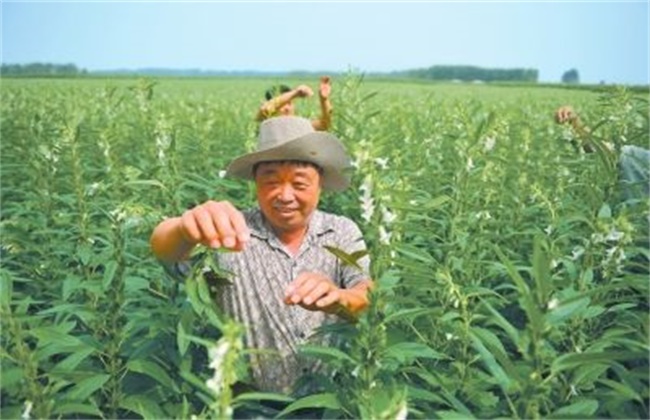
1. The role of topping sesame
In the early stage, sesame leaves are broad and large; in the later stage, the leaves change from heart-shaped to lance-shaped. Through photosynthesis they consume nutrients, which affects the seed-setting rate and quality of sesame to a certain extent, so appropriate topping is needed. Topping can optimize the growing environment of sesame, regulate the plant's nutrient distribution, reduce ineffective consumption of nutrients, and promote the reproductive growth of sesame. Extending leaf photosynthesis can increase the seed-setting rate and the plumpness of the grains, with obvious effects in increasing both yield and quality.
2. Topping time for sesame
The topping time for sesame must be well controlled. Topping too early will reduce the number of capsules and the number of photosynthetic leaves, while topping too late will fail to achieve the purpose of regulating nutrients, leading to an increase in the number of ineffective capsules. Generally, topping is carried out after 60 days, and the best period is 25-30 days, that is, three weeks after the first flowering. The specific time depends on the variety, season, and climatic conditions. Generally, autumn-cultivated varieties can be topped 24 days after flowering, while summer-cultivated ones are usually topped 25-30 days after the first flowering.
3. Topping precautions
Although sesame can be topped, leaf removal is prohibited. In some sesame-growing areas, farmers pick sesame leaves for use, which can cause a yield reduction of about 20%-30%. After the first flowering, among the functional leaves at the capsule-bearing sites, the photosynthates of sesame are transported and distributed most to the lateral capsules, less to the side ones, and very little transversely. Therefore, sesame after leaf removal will have reduced plumpness of the capsule grains and poor quality, so leaf removal must be prohibited.
4. Plant growth regulators
During crop cultivation, some plant growth regulators are used to ensure yield, such as flumetralin for topping cotton. Sesame can also use chlormequat, triiodobenzoic acid, and others, which can effectively increase yield and reduce the rate of shriveled grains. However, paclobutrazol, commonly used in crop production, has no yield-increasing effect on sesame and cannot replace topping.
The above is an introduction to the topping time and precautions for sesame. We hope it helps you. For more related knowledge, please stay tuned to us.