Detailed Explanation of Key Techniques for Delayed Autumn Cultivation of Peppers
Pepper fruiting generally comes to an end when summer finishes, and in the "little Indian summer" of the Hunan region, they sometimes set fruit once more. This shows that peppers can actually still bear fruit in autumn as long as the temperature is suitable. Therefore, in order to maximize yield, delayed autumn cultivation can also be carried out. Delayed autumn cultivation has certain requirements and must be done using appropriate methods. For detailed content, continue reading.
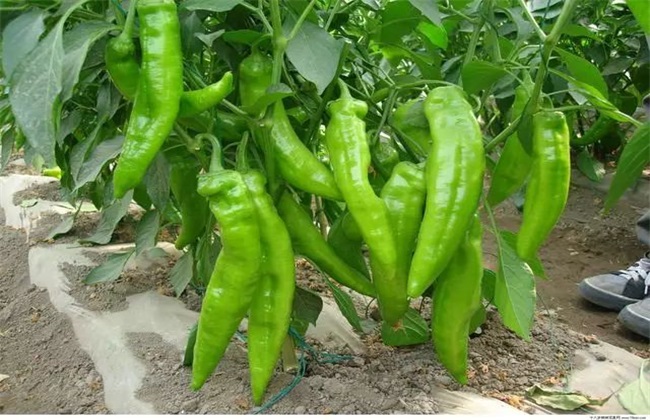
1. Selecting Good Varieties
To carry out delayed autumn cultivation, you must consider before planting that you need to choose varieties suitable for delayed autumn cultivation. Generally, choose excellent varieties with strong disease resistance, good growth vigor, high yield, cold tolerance, and tolerance to high summer temperatures, and make sure they suit autumn weather.
2. Raising Seedlings and Transplanting
Raise seedlings from July to August. The seedbed should be about 1 m wide, not too long, so that planting can be ensured around the Beginning of Autumn. When the seedlings have grown to about 10-plus cm, they can be transplanted. The seedling stage can be completed in about one month, and the approximate time for transplanting is when 5 true leaves appear. The seedlings to be cultivated are required to have a strong root system, normal leaf color, upright and robust plants, with no yellowing or signs of chewing damage by pests and diseases.
3. Planting Method
Apply 1300 jin of farmyard manure per mu as base fertilizer. Farmyard manure, especially barnyard manure, must be fully decomposed to release heat and ensure the killing of some disease-carrying pathogens. Use it together with 50 jin of compound fertilizer and 100 jin of plant ash. The planting spacing is 30 cm between plants and 40 cm between rows, enough to allow people to pass through. Dig holes for planting, spread the roots out, cover soil up to the root crown, and water to keep moist. The planting density of about 600 to 800 plants per mu is sufficient.
4. Field Management
Generally, greenhouse cultivation is used, so the daytime temperature should be controlled at 24 to 28°C and the nighttime temperature at 15 to 20°C. In early autumn during the "little Indian summer," the temperature is suitable; in late autumn when cold winds arrive and the river water turns cold, temperature control must be adjusted manually. During the "little Indian summer," if the temperature inside the greenhouse is high, ventilation can be done at night, but do not allow draft during the day, as hot air can easily flow in. During cold periods, straw mats can be laid over the greenhouse film to keep warm.
5. Adjusting the Plants
In order to concentrate nutrients, remove branches that have not set fruit, and pinch off the tips of fruit-bearing branches to prevent the shoots from growing. This is to maintain the growth vigor of the plants. When growth vigor is weak, remove all axillary buds except those of the first pepper, and thin out some flower buds. When removing the top heart leaves, keep a few leaves near the fruit.
For delayed autumn cultivation of peppers, seedlings should be raised in summer and cultivated in autumn, but summer has high temperatures and late autumn has low temperatures, so attention should be paid to raising seedlings in a cool, shaded place. When planting in a greenhouse, temperature control and insulation are needed, which can be achieved through double-layer film or straw mats.